Unearthing the Halling Man
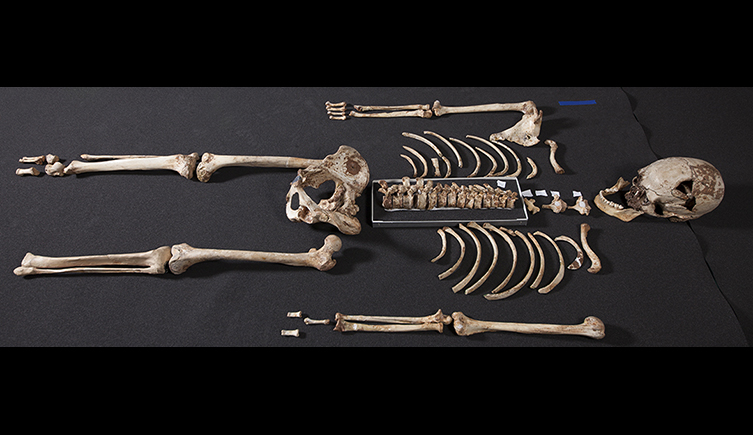
### Unearthing the Halling Man: A Prehistoric Briton Who Walked Among Mammoths
In the quiet village of Halling, nestled along the banks of the River Medway in Kent, England, a chance landslip during an excavation unearthed a skeleton that rewrote our understanding of early human history. Discovered in the early 20th century, this "Halling Man" wasn't just any ancient remains—he was a surprisingly modern-looking fellow from the twilight of the Paleolithic Age, a time when woolly mammoths and rhinoceroses roamed the British landscape. As detailed in a vintage article titled "Skulls as Milestones of the Ages," this find bridges the gap between our ape-like ancestors and the Homo sapiens we recognize today.
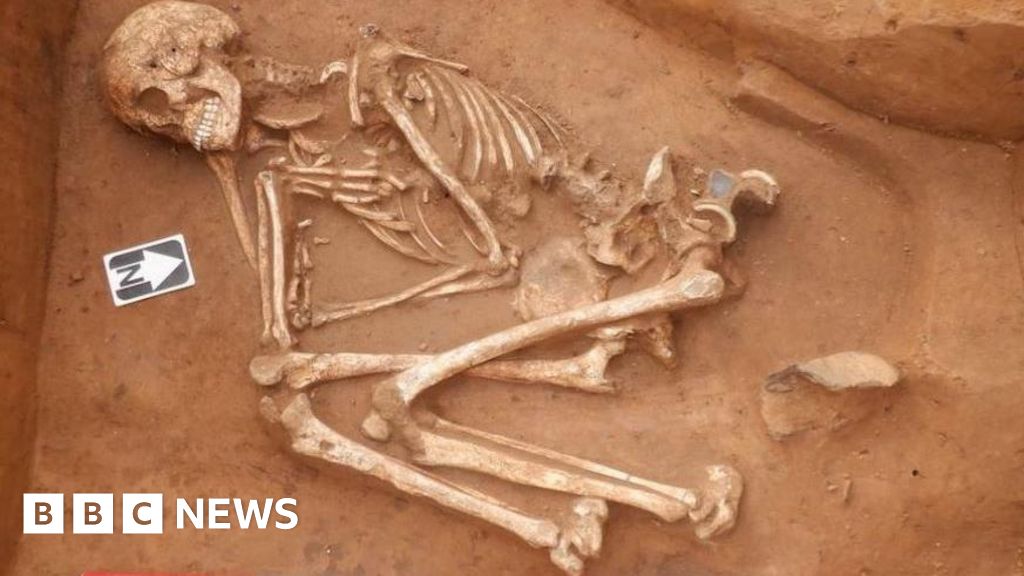
Picture this: It's the Pleistocene epoch, roughly 15,000 to 30,000 years ago (or even earlier, based on geological clues). The Halling Man lived in a world of harsh survival, hunting alongside reindeer and arctic foxes. His skeleton was found buried in a layer of "brick earth"—ancient sediment washed down over millennia—beneath undisturbed strata of sand, loam, and topsoil, totaling about six feet deep. Nearby, archaeologists uncovered fire hearths with charred bones, worked flints, and animal remains, suggesting a Paleolithic encampment. The body was interred in a contracted posture, head facing east, hinting at early ritualistic practices.
What makes Halling Man so captivating? Despite his antiquity, he was eerily similar to us. Standing about 5 feet 4 inches tall, with a robust build and a brain capacity of around 1,500 cubic centimeters (surpassing the modern average!), his skull lacked the heavy brow ridges of earlier hominids like Neanderthals or the infamous Piltdown specimen. Professor Arthur Keith, who examined the remains at the Royal College of Surgeons, noted his long oval face, pointed chin, and overall resemblance to everyday people on the street. This "river-bed type" human, as dubbed by Thomas Huxley, represented a leap in evolution—far superior to the brutish forms from hundreds of thousands of years prior, like the Java Man or Gibraltar skull.
The discovery filled a crucial gap in Britain's prehistoric timeline. Before Halling, we knew little about our ancestors at the end of the Pleistocene. Compared to the older Piltdown skull (now known as a hoax, but controversial then) or the Galley Hill find (estimated 30,000 years old with a brain capacity of 1,350–1,400 cc), Halling Man showed rapid cranial development. Yet, intriguingly, a Neolithic skull from Walton-on-the-Naze (just 4,000 years old) had a smaller brain at 1,260 cc, challenging assumptions about steady progress.
This story isn't just bones and dates—it's a window into human resilience. Halling Man survived in a glacial world, crafting tools and building fires, all while evolving the traits that define us. As the article muses, measuring antiquity by evolution's pace, we're reminded how far we've come... and how connected we remain to those ancient wanderers.
If you're fascinated by paleoanthropology, Halling Man's tale proves that sometimes, the most ordinary villages hold the keys to our extraordinary past. Who knows what other milestones lie buried beneath our feet?
Gallery
Discussion (0)
Please sign in to join the discussion
No comments yet. Be the first to share your thoughts!