Unearthing Ecuador's Pre-Columbian Dental Bling
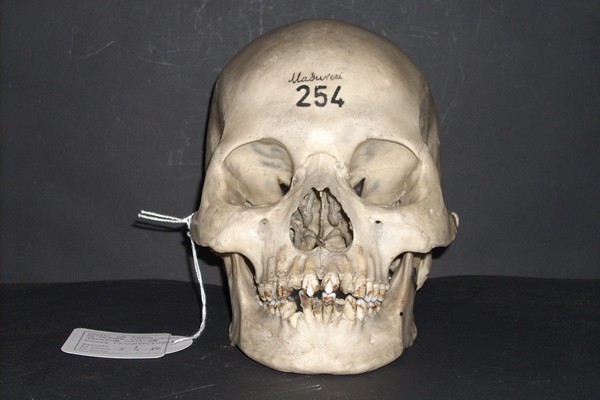
Ancient Gold in Ancient Teeth: Unearthing Ecuador's Pre-Columbian Dental Bling
In the early 20th century, as the world grappled with the aftermath of global conflicts and rapid industrialization, archaeologists were uncovering secrets from civilizations long forgotten. One such revelation came from the coastal province of Esmeraldas in Ecuador, where Professor Marshall H. Saville, an intrepid explorer and scholar, delved into the remnants of an ancient people whose flair for decoration knew no bounds. His findings, detailed in a 1914 newspaper article from Laramie, Wyoming, of all places, paint a picture of a society obsessed with gold—not just for jewelry, but for embedding it directly into their bodies, including their teeth.
Saville's expeditions, funded by the Heye Museum in New York, spanned years of meticulous work along Ecuador's rugged coast. From 1906 onward, he traversed 150 miles of terrain, unearthing artifacts that revealed a culture thriving in pre-Columbian times. These people adorned themselves extravagantly: gold decorations on garments, necklaces, bracelets, anklets, elaborate ear ornaments, lip plugs (labrets), and massive nose pendants attached to the septum or fleshy sides. But their vanity didn't stop at wearable bling. They pierced their faces with bent gold tacks or nails, studding cheeks and the sides of the mouth like living canvases.
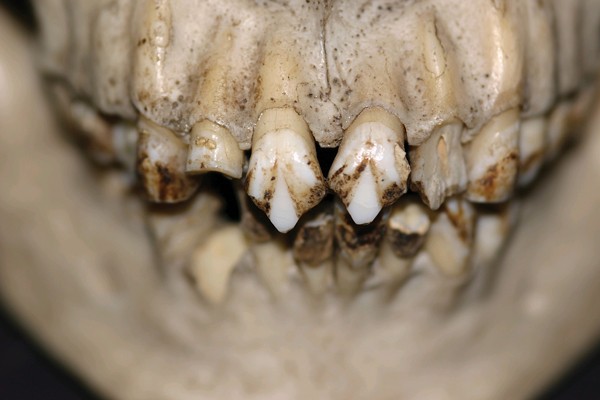
The real jaw-dropper? Their dental modifications. Far beyond modern grills or veneers, these ancients skillfully altered their teeth for aesthetic purposes. Gold disks were inserted into carefully drilled cavities in the upper teeth, and in some cases, gold wire was intertwined between them. Tiny disks with projecting bands even clamped around individual teeth. Saville brought back two extraordinary specimens now housed in the Heye Museum, showcasing what might be some of the earliest examples of cosmetic dentistry.
The first, discovered in 1913 by a local Cholo native near Atacames (about 18 miles southwest of Esmeraldas), was a fragment of an upper jaw from a burial tube along the Atacames River. The two upper middle teeth featured thin gold disks embedded in the enamel. Remarkably, one of these was a lateral incisor implanted to replace a missing middle incisor—a feat of ancient dentistry that Saville authenticated as pre-Columbian. No signs of infection or rejection; this was skilled work, done during the person's lifetime for pure ornamentation.
Even more astonishing was the second skull, unearthed in 1909 at La Piedra near the Esmeraldas River's mouth into San Mateo Bay. Accidentally spotted protruding from a riverbank by locals, including American consular agent George D. Hedian, this adult female's skull had its upper jaw crushed but intact enough to reveal a unique technique. The four incisors and two canines had their enamel meticulously removed—almost entirely, leaving narrow bands at the base and top. Thin gold overlays were then fitted over the exposed dentine, folded over the sides for security. In some spots, the enamel was undercut or beveled to lock the gold in place. Saville noted the precision: no decay, no damage to the dentine, suggesting these overlays were worn comfortably for years. The purpose? Not tooth preservation, but sheer decoration—to make their smiles gleam with gold.
These discoveries highlight a civilization where beauty and status were etched into the body itself. Unlike modern dentistry focused on function, this was art: faces and mouths transformed into golden spectacles. Saville's work reminds us that human ingenuity in self-expression dates back millennia, blending craftsmanship with cultural rituals.
Today, over a century later, these artifacts in the Heye Museum (now part of the National Museum of the American Indian) continue to fascinate. They bridge the gap between ancient practices and contemporary trends like diamond-studded grills. If you're intrigued by history's hidden gems—literally—Saville's Ecuadorian finds prove that bling has always been king. Who knew a smile could hold such timeless treasure?
Gallery
Discussion (0)
Please sign in to join the discussion
No comments yet. Be the first to share your thoughts!