The Secret UFO Reporting Rules of 1956: When Speaking Out Could Get You Imprisoned 🛸👽
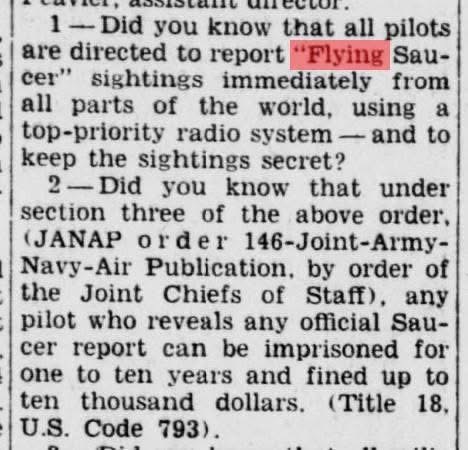
In the mid-1950s, during the height of the Cold War, UFO sightings weren’t just a curiosity — they were classified as potential threats to national security. What most people don’t realize is that the U.S. and its allies had *official military directives* requiring pilots to report strange aerial phenomena through secure military channels. But here’s the catch: revealing these sightings to the public could land you in serious trouble.
JANAP-146 and the Silence Policy
One of the most significant of these directives was known as **JANAP-146**, short for *Joint Army-Navy-Air Force Publication 146*, issued around **1956** under the title *“Communications Instructions for Reporting Visual Intelligence Sightings” (CIRVIS)*.
This classified NATO directive required **all military and civilian pilots**, as well as **naval and commercial crews**, to report any *unusual or unidentified* aerial objects immediately. Reports had to include detailed information such as:
- Exact time and geographic coordinates (latitude and longitude)
- Altitude, direction, and estimated speed
- Shape, size, and color of the object
- Formation or number of objects
- Sounds heard and other distinguishing features
These reports weren’t mere curiosities — they were channeled directly through **encrypted military communication systems** and forwarded to the **Air Defense Command** and the **Air Technical Intelligence Center (ATIC)** at Wright-Patterson Air Force Base.
The stated goal was to gather intelligence on unidentified aircraft that might represent foreign threats. But for those who witnessed something truly unexplained, **disclosing it publicly was strictly forbidden**. Violating the directive could result in **heavy fines or even imprisonment**.
Air Force Regulation 200-2: UFOs Under Investigation
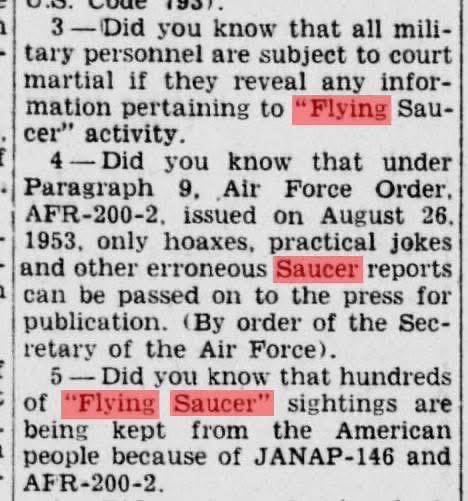
Around the same time, **Air Force Regulation 200-2** formalized how **U.S. Air Force personnel** were to handle UFO encounters. Reports were sent directly to ATIC, which became the headquarters for official UFO investigation. This highly structured process emphasized:
- Rapid reporting and verification
- Strict confidentiality
- Absolute prohibition of public disclosure
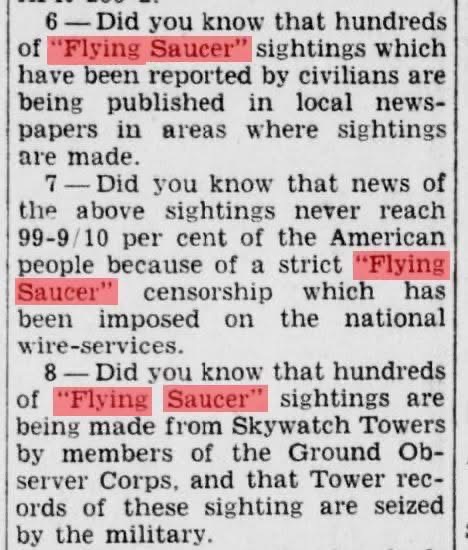
In effect, the Air Force controlled the entire flow of information regarding UFO sightings — ensuring that any unexplained incidents stayed tightly within military intelligence circles.
A Climate of Secrecy
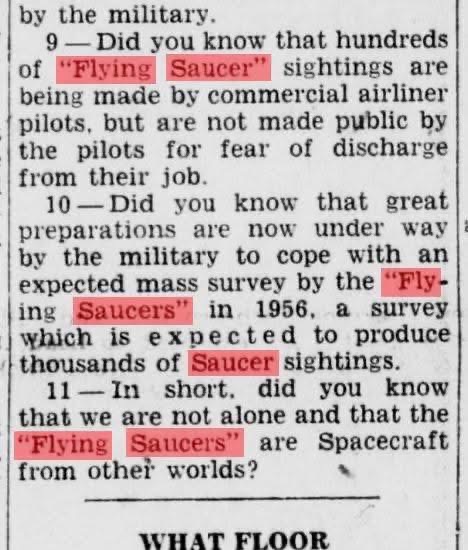
Within this Cold War reporting environment, **UFO sightings were treated as matters of intelligence, not science or curiosity**. Pilots, radar operators, and aircrew members were often the ones submitting reports, but many grew frustrated by the secrecy surrounding them. Some even attempted to petition for more transparency, but restrictions remained firm.
The rationale was simple: in an era dominated by fears of Soviet espionage and advanced aircraft, *no unknown aerial event could be dismissed lightly*.
Foundation for Project Blue Book
These procedures set the stage for the Air Force’s later UFO programs — **Project Sign (1948)**, **Project Grudge (1949)**, and the most famous, **Project Blue Book (1952–1969)**. Each of these continued the pattern of official investigation paired with public silence, shaping decades of UFO secrecy that still spark debate today.
So next time you hear about a UFO cover-up, remember: it didn’t start with Roswell or Area 51. The roots of government control over UFO reporting stretch back to directives like JANAP-146 — where speaking publicly about what you saw in the sky could make you a criminal.
Gallery
Discussion (0)
Please sign in to join the discussion
No comments yet. Be the first to share your thoughts!