The Pre-Inca Civilization
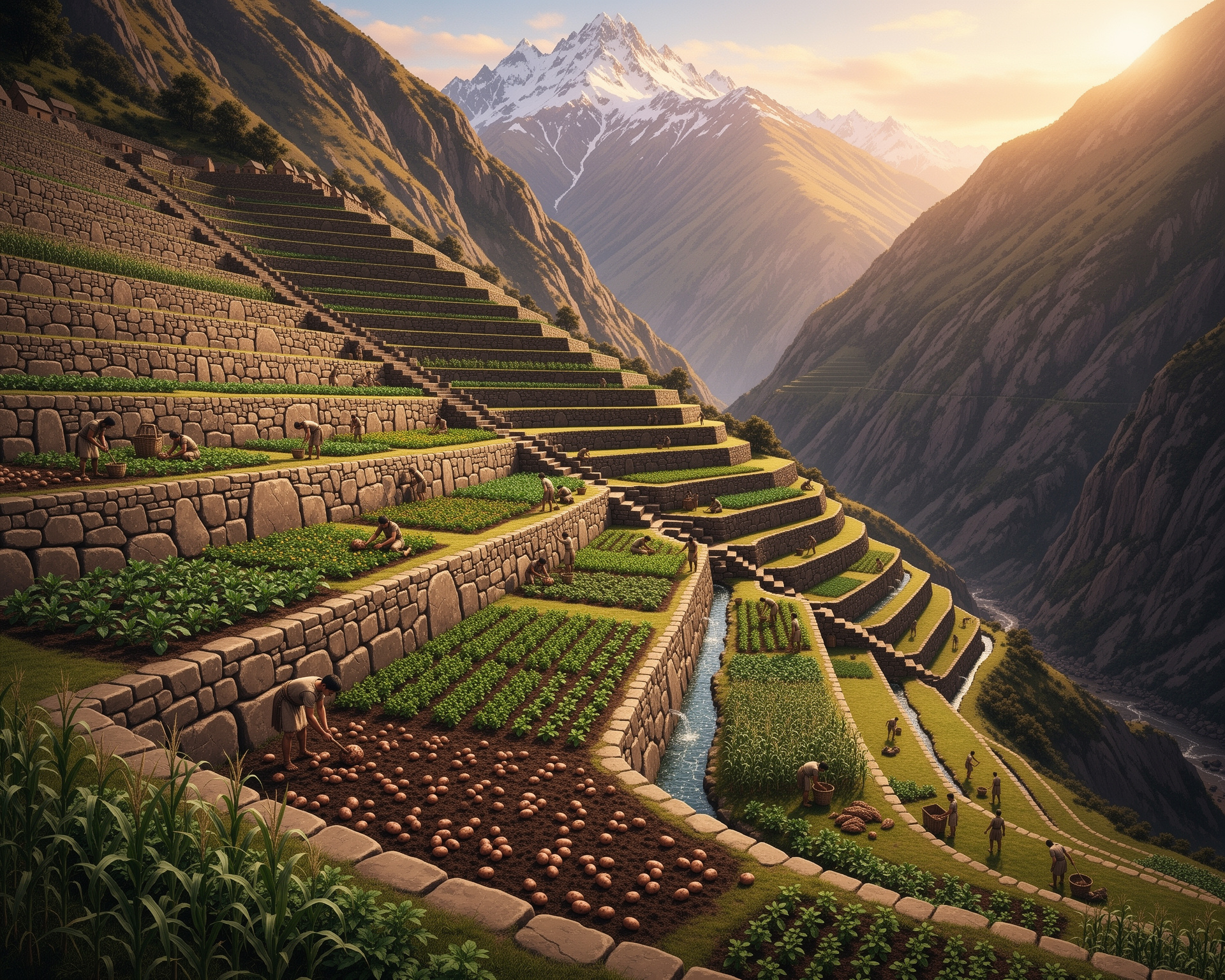
To the ancient peoples of Peru, the world owes a surprising debt: the potato. Long before it was mislabeled the “Irish” potato, it was cultivated with great skill by a vanished civilization now called the pre-Incas. These people built a highly organized society, developed a brilliant agricultural system, and completed staggering engineering feats centuries before the famous Inca Empire that Pizarro and his conquistadors later destroyed.
Many in the modern world proudly assume that today’s agriculture represents the pinnacle of human achievement. Yet when compared with what the ancient Peruvians accomplished using only the simplest tools and working under severe natural constraints, our efforts seem small indeed. The pre-Incas were among the most industrious and tightly organized agricultural peoples in history, and the scale and sophistication of their work put our “advanced” methods to shame.
To better understand this lost genius, a scientific expedition was sent to Peru by the National Geographic Society in cooperation with Yale University. Among the researchers was Dr. O. F. Cook, a botanist with the society and the U.S. Department of Agriculture’s Bureau of Plant Industry. After arduous journeys through remote Andean valleys and the ruins of forgotten cities, the team returned and published part of its findings in the National Geographic Magazine. The report was so astonishing that it deserved attention from every farmer and citizen interested in the land.
The conclusion was clear: agriculture is not a steadily rising art, but one that reached extraordinary heights in the distant past and then declined. Measured against the achievements of these ancient Peruvians, modern agriculture has not yet regained that former glory. Their systems enabled them to sustain large populations in rugged regions where a modern farmer would see nothing but hardship and impossibility.
At a time when the ancestors of Northern Europe still lived as near savages—clothed in skins, hunting and fishing for survival—settled, advanced agricultural communities flourished in the Peruvian highlands. The greatest of these works were created by a people so ancient that even their name is lost. They lived before the Inca Empire that the Spanish overthrew some four centuries ago, and yet the monuments of their labor still tower over the landscape.
Evidence suggests these American ancients were also explorers and colonizers. Their influence may have extended as far north as what is now Arizona, New Mexico, and perhaps even California, where certain ruins hint at shared traditions. In their home ranges, however, they accomplished what most modern engineers would dismiss as impossible. They reclaimed and cultivated land that a present-day farmer would not consider fit even for goats.
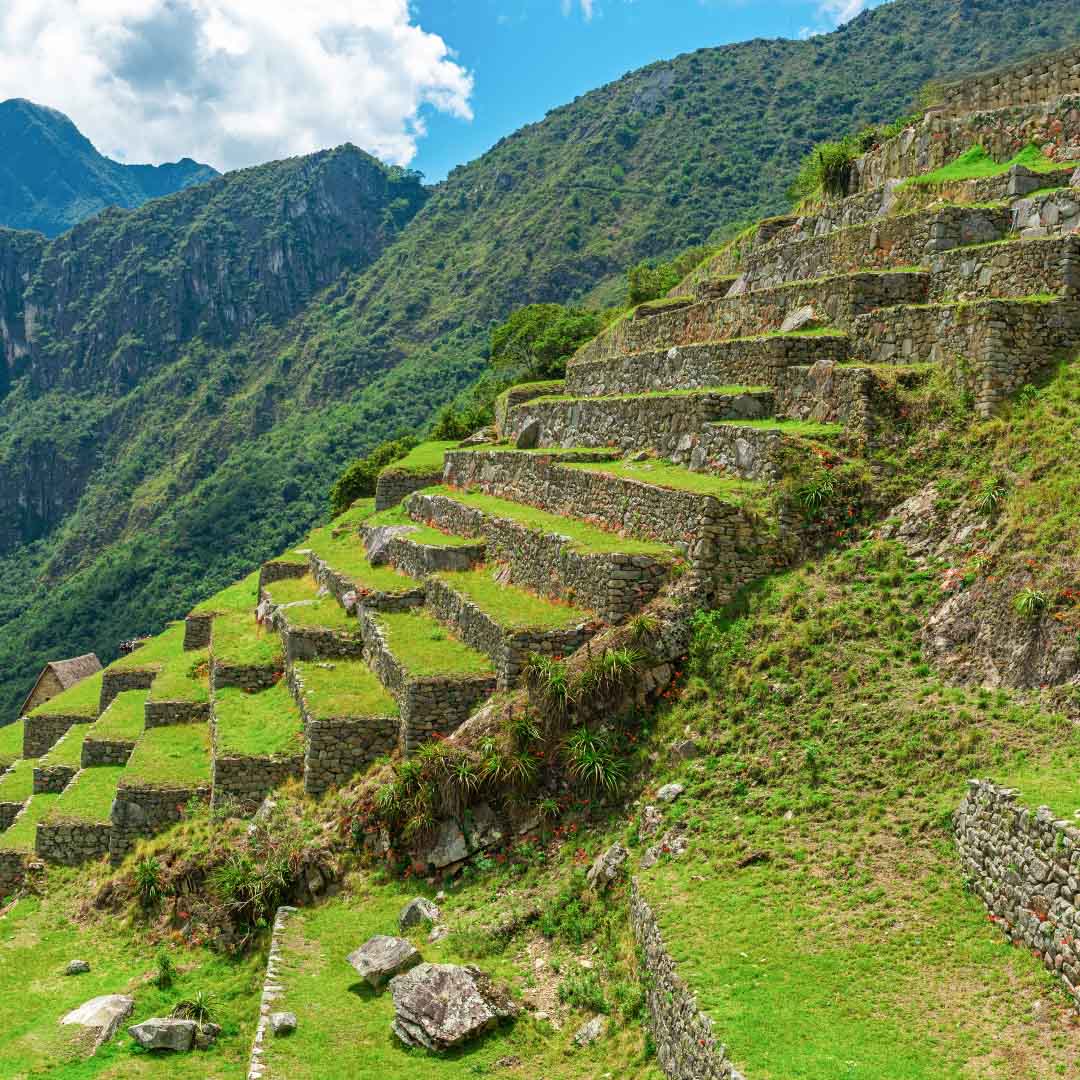
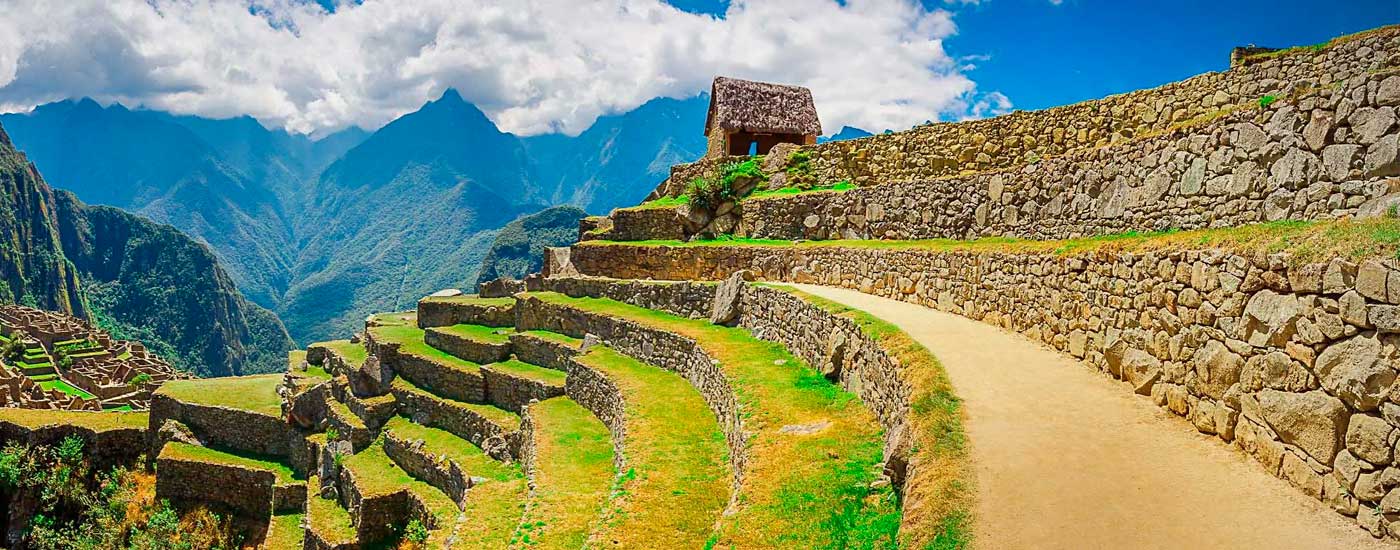
The pre-Incas straightened rivers that twisted through deep mountain gulches. They constructed immense terraces, stacking “hanging gardens” up the flanks of steep slopes. Each terrace was faced with massive stone walls made of huge, irregular blocks—some weighing 20 tons—fitted together with such precision that even today a knife blade cannot be slipped between them. In many places, the joints are so fine that a magnifying glass is needed to detect the seam.
We consider ourselves “super-efficient” and technically superior, yet beside these works we are mere pygmies. These people possessed a practical understanding of soils, fertility, tillage, irrigation, crop rotation, land reclamation, and erosion control that surpasses the knowledge of many of our most celebrated experts. In the diversion of streams, the conservation of rainfall, and the prevention of soil loss, they were true masters.
Their genius shone most brightly in their creation of soil itself. On narrow valley floors and steep mountain flanks, they built thousands of acres of terraces, sometimes rising hundreds of feet—higher even than the Washington Monument. Onto these stone platforms they carried and assembled soil by hand, somehow transporting and arranging it in ways that still puzzle scientists. These man-made fields, carefully irrigated from above, remain productive to this day and still support much of the modern population in those valleys.
The reason for using slopes, rather than level plateau land, was simple and scientific: they thus avoided damaging frosts that plagued the higher flatlands. Their painstaking work transformed what appeared to be barren rock into thriving agricultural landscapes. The labor and organization required for this effort is almost beyond belief, yet the surviving terraces stand as silent proof.
Dr. Cook noted that modern irrigation projects in the Western United States—such as reclaiming broad, level deserts by simply adding water—seem modest in comparison. Long before Europeans ever dreamed of America, the native agricultural engineers of Peru had already reached the stage of grand reclamation. Our proudest undertakings shrink beside what this vanished race achieved.
The rocky ravines and narrow canyon floors that would strike today’s engineers as hopeless were converted into fertile, densely populated districts. The success of these works cannot be doubted, for thousands of acres of their artificial fields are still in use centuries later. The local people of today treat these structures as a natural part of the landscape, seldom considering the nearly unimaginable effort behind them.
When compared to the Andean “hanging gardens,” the famous gardens of Babylon seem modest. Picture gigantic staircase farms, terrace stacked upon terrace, each with its own massive retaining wall, each plot carefully filled with constructed soil and irrigated by expertly controlled water channels flowing down from above. These were true masterpieces of agricultural engineering.
The ancient Peruvians also built aqueducts that rival anything known in history. In this light, even the Panama Canal appears less impressive. These people diverted powerful rivers, rock-revetted channels and irrigation ditches for countless miles, and even learned to control glacial waters by clearing mountain slopes and exposing the ice to the sun. Their control of water and land bordered on the miraculous.
What was the secret behind such astonishing achievements? According to the scientists of the Yale expedition, the answer lay in one key principle: cooperation for the common good. Their society organized labor, knowledge, and resources on a scale that allowed them to attempt and complete projects that would overwhelm any isolated individual or small group.
Peru also stands out as one of the world’s greatest centers of plant domestication. More wild plants were brought under cultivation there than in any other region on earth. We boast of modern plant breeders like Luther Burbank, yet among these ancient agronomists he would have found teachers rather than pupils. While we celebrate the reclamation of places like California’s Imperial Valley, often relying on simple dirt dikes and unlined canals, the Peruvians long ago diverted rivers as mighty as the Colorado and contained them within carefully stone-lined channels.
In every direction—terracing, irrigation, soil construction, plant domestication, and large-scale land reclamation—the ancient agricultural civilization of Peru demonstrates that our modern accomplishments are not the summit of human skill, but, at best, an attempt to regain heights once reached by a people whose very name has been forgotten.
Source: https://www.loc.gov/resource/sn86076367/1916-09-09/ed-1/?sp=2&q=Vanished+race&r=0.001,0.182,0.349,0.208,0
Gallery
Discussion (0)
Please sign in to join the discussion
No comments yet. Be the first to share your thoughts!