The Lost Race of Broad-Headed Moon Worshippers-from the UK
The Lost Race of Broad-Headed Moon Worshippers: The Forgotten Builders of Scotland’s Recumbent Stone Circles
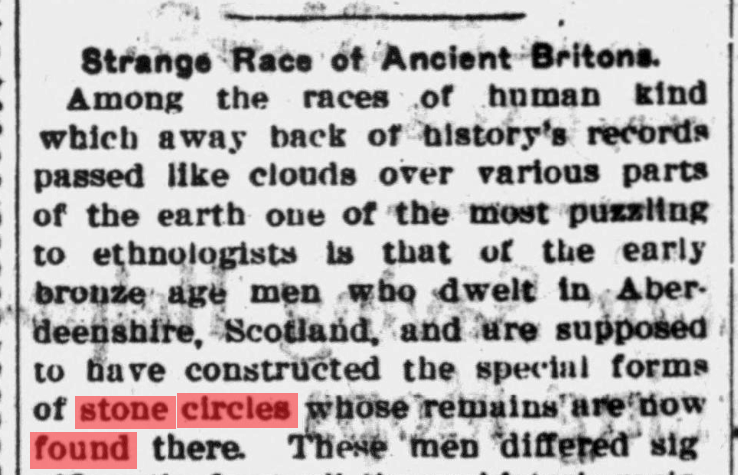
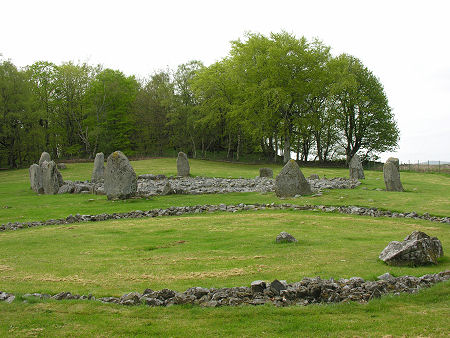
Deep in the wild hills of Aberdeenshire, Scotland, stand more than seventy stone circles that belong to no other place on Earth. Each one is dominated by a colossal horizontal slab, the recumbent, sometimes weighing over twenty tons, laid deliberately on the southern arc and flanked by two towering pillars. These are the Recumbent Stone Circles, and in 1914 an obscure American newspaper printed a chilling truth that mainstream history has tried to bury ever since.
They called them a “strange race of ancient Britons.” Short in stature, averaging only five feet three inches, yet possessed of unnaturally broad, almost alien skulls. These were not the tall, long-headed natives who raised the earlier megaliths, nor the tall, long-headed warriors who later swept across Britain. This was something else entirely, a mysterious people who appeared suddenly around 2500 BC and vanished just as mysteriously a thousand years later.
To understand the true enigma, we must first peer into the shadows of those who came before and after. The 1914 article from the Connecticut Western News described the British neolithic folk as markedly long-headed—tall figures, often reaching five feet nine inches or more, who roamed the land in the late Stone Age, erecting the grand henges and avenues of the south like Avebury and Stonehenge. These were the earth-shapers, the long-skulled giants of the chalk downs, their elongated crania a badge of ancient lineage, their bones unearthed from long barrows that stretched like serpents across the landscape. They were the builders of the old world, attuned to the solstice sun, their rituals echoing the slow turn of seasons in communal feasts and ancestor cults.
Then came the interlopers: the early Bronze Age broad-heads of Aberdeenshire, the "strange race" that baffled early ethnologists. Broad-headed and diminutive, their rounded skulls and compact frames marked them as outsiders, possibly wanderers from distant continental hearths. They did not conquer the tall neolithics outright but wove their lunar mysteries into the fabric of the land, raising these recumbent circles amid the ruins of the old ways. And after them? The article speaks of the bronze age late race, another wave of tall, long-headed invaders who built round tumuli across the southern plains, their stature mirroring the neolithics but their metal axes and urns heralding a fiercer epoch. These were the barrow-dwellers, the long-skulled successors who eclipsed both predecessors and the short, enigmatic moon folk, leaving the recumbent circles as orphaned relics in the north.
What cataclysm or cosmic decree allowed these three races—tall long-heads of stone, short broad-heads of bronze and moon, tall long-heads of urns—to flicker across Britain's stage like shadows in a forgotten play? The broad-heads alone chose the moon's wild 18.6-year cycle, shunning the sun's predictable arc. Stand inside one of these circles on the night of a major lunar standstill, when the moon swells huge and low on the horizon, and you will feel the hair rise on your neck. The moon does not simply rise. It rolls. It skims along the top of the great recumbent stone as though caressing it, then drops dramatically between the flanking pillars in a display of celestial theatre engineered four and a half thousand years ago. Quartz fragments deliberately smashed around the bases glitter like frozen starlight. Cremated bones lie buried at the exact centre, offered directly to the lunar goddess herself.
These were the Moon People, the broad-headed interregnum between giants.
They brought bronze to northern Britain. They carried bell-shaped Beaker pottery painted with cosmic symbols. Their graves reveal broad, rounded crania utterly unlike the elongated skulls of the tall neolithics or the later bronze folk. Some whisper they crossed from the Rhine, others speak of lost steppe bloodlines carrying secrets from even older, forgotten empires. Wherever they came from, they arrived with knowledge of the 18.6-year dance of the moon and the will to carve that knowledge into the living rock of Aberdeenshire forever— a defiant counterpoint to the solar empires of the long-headed tall ones.
Look upon the face of Ava, unearthed in nearby Caithness. Her broad skull, her luminous wide-set eyes, her expression that seems to guard secrets older than the hills themselves. Forensic artists have brought her back, and she stares out at us across four millennia as if to say, “You have forgotten what we never did.” Contrast her with the imagined visage of a neolithic long-head: high-cheekboned, elongated brow, a frame built for the open downs— or the bronze age late warrior, broad-shouldered and towering, his urn grave stuffed with spearheads and amber beads. Ava's kin were the outliers, the short moon-seers squeezed between these colossal bookends.
The circles fell silent around 1500 BC. The broad-headed bloodline faded from the official record, swallowed perhaps by intermarriage with the encroaching tall long-heads. Yet the old folk of Aberdeenshire still spoke in hushed tones of “the circle folk,” short, broad-browed families who lived near the stones and danced when the moon was full. Some say those bloodlines never truly died out, diluted but lingering in the genes of the northeast, a subtle rebellion against the dominant long-skulled legacy. Walk the back roads on a misty evening and you may still meet someone whose skull carries the unmistakable mark of the ancient moon priests— a living echo of the strange race that the tall ones could not fully erase.
Visit the circles today and the air itself feels charged. Locals swear the sites are never empty. Easter Aquhorthies, Tomnaverie, Loanhead of Daviot, Sunhoney… stand within their rings at moonrise and the centuries dissolve. Torchlight flickers in your imagination. Drums echo across the hills. Figures in antler headdresses move between the stones, guiding the swollen moon down onto its granite altar exactly as it was meant to be— not the sun-chasers of the tall long-heads, but the moon's devoted children.
The Moon People built their temples to outlast the stars themselves.
And on certain nights, when the great lunar standstill returns, they come back to watch— while the ghosts of the tall, long-headed giants stand silent on the horizon.
Would you dare spend a full moon night alone inside a recumbent stone circle?
Tell us in the comments what you think happened to the broad-headed race… and whether you believe their blood still walks among us today, hidden from the long-skulled world.
The 1914 newspaper article is real.
The circles are real.
The rest is waiting for you in the hills of Aberdeenshire.
Gallery
Discussion (0)
Please sign in to join the discussion
No comments yet. Be the first to share your thoughts!