Secrets of the Grave Creek Mound: Twin Tombs, a Mysterious Stone, and a Forgotten Nation
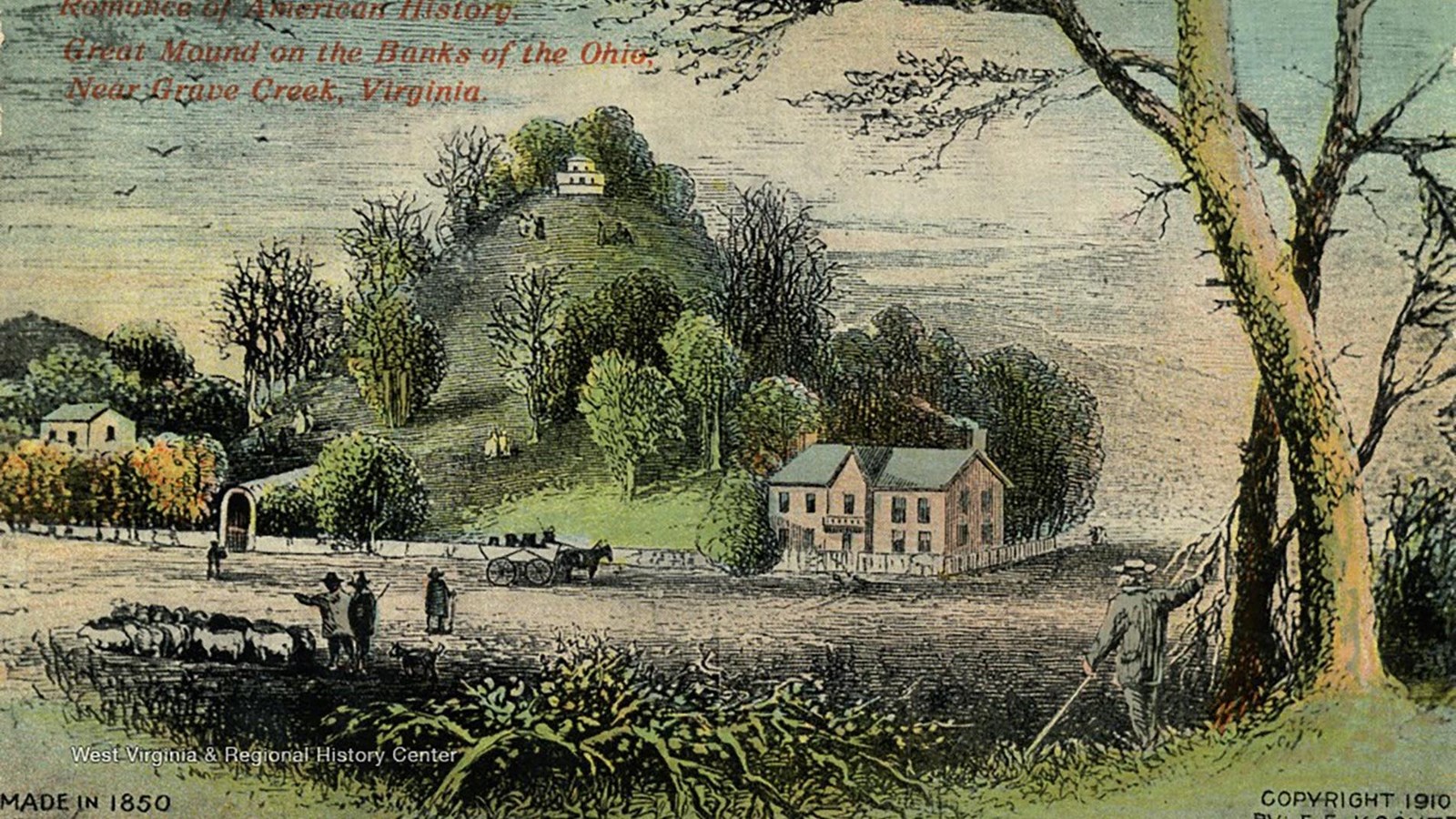
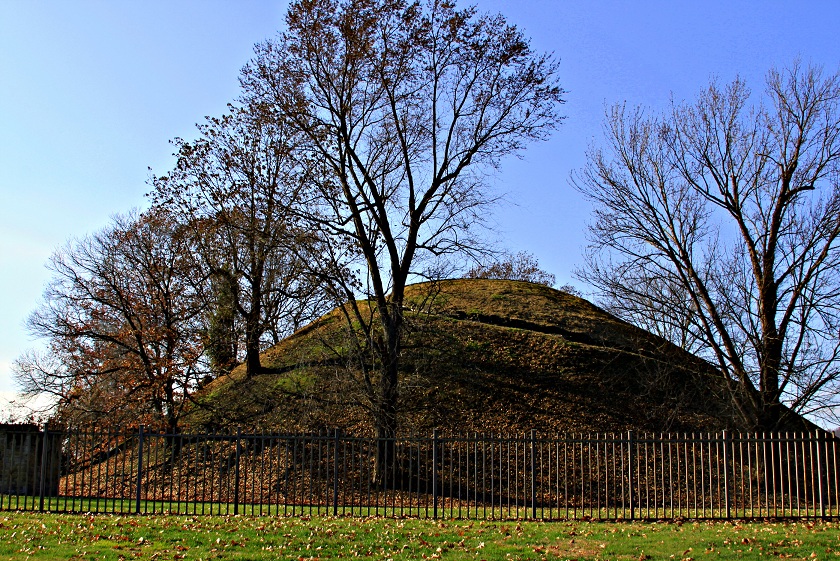
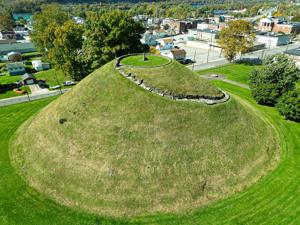
On a terrace of the Ohio River, twelve miles below Wheeling, rises the Grave Creek Mound, towering over the town of Moundsville, Virginia (now West Virginia). Early surveyors measured it at about 69 feet high, with a base nearly 295 feet across and a flattened summit 60 feet in diameter, making it one of the largest known mounds in North America. Even when first seen by Euro‑American settlers, its slopes were crowned with heavy timber, including a white oak estimated at roughly seven hundred years old, hinting that the mound itself was already ancient when that tree first sprouted.
Within living memory of the article’s author, Jesse Tomlinson, the proprietor, refused every proposal to level or disfigure the mound, insisting it remain intact. Only when age pressed on him, and he feared what future owners might do, did he agree to a carefully planned excavation that would preserve the exterior while revealing the secrets within.
Opening the Ancient Vaults
The explorers began a horizontal tunnel on the north side, about four feet above the natural ground, driving a six‑foot‑wide, eight‑foot‑high drift towards the center. As they dug, they saw the original land surface inside the mound: the builders had started on a natural rise seven or eight feet above the surrounding plain, then piled earth over it. At the heart of the mound, they broke into a central vault at the base, and later discovered a second vault near the top, showing that the great tumulus had been enlarged at two distinct, possibly widely separated, periods.
The lower vault had been excavated roughly seven or eight feet into natural soil, then roofed with timber uprights supporting a wooden cover, over which the builders laid a stone layer about two and a half feet thick. The stones—rounded, water‑worn boulders from the Ohio River and Big Grave Creek, some weighing up to 150 pounds—showed no tool marks, just loose, simple masonry. A portion of the stone appears to have been carried from a novaculite outcrop on the opposite bank of the Ohio, indicating the use of rafts, canoes, or log craft to ferry material across the river.
Over time, the timber roof decayed, collapsing under the weight of the mound and filling the vault with earth and light, leaf‑like mould. Yet within this chaos the bones and grave goods of the buried nobles endured, awaiting rediscovery centuries later.
Skeletons of Chiefs and Their Ornaments
In the lower vault lay two skeletons, their heads close together near the center, feet extended roughly in opposite directions. Their positions led the excavators to suspect they had originally been placed standing, only later toppling inward when the roof gave way. The bones were fragile and incomplete; what remained from both did not equal the weight of a single well‑preserved skeleton.
One skeleton bore large, rude ivory beads and a stone ornament, suggesting high rank. Its massive lower jaw and robust bones led to the conjecture that this was a male, possibly a chief. The second skeleton, more delicate, lacked ornaments and had a smaller jaw, leading the explorers—speculatively—to see it as female, perhaps the chief’s wife. Both individuals had teeth worn almost flat, the upper and lower incisors meeting squarely rather than overlapping, wear consistent with advanced age.
The upper vault contained a single skeleton, so decayed that only a hat‑crown full of bone fragments and a complete set of thirty‑two sound teeth could be saved. If the lower burial spoke of rank, the upper spoke of status and display. Around this person were:
- About 1,700 ivory beads
- Some 500 small sea shells of the genus Voluta, drilled and strung as beads
- Sixty‑six thin sheets of mica (“isinglass”), many perforated with four holes, likely worn as shimmering ornaments
- Five large oval copper bracelets, three around one wrist and two thicker ones around the other.
The copper rings, heavily coated in green oxidation, still held a ghost of human touch: on two bracelets, the oxide preserved the ridged lines of the skin from the upper palm, where it had formed against the hand before the flesh decayed. This combination of copper, shell, mica, and engraving suggests that by the time of the upper burial, the local culture had advanced significantly in artistry and social display compared with the period of the lower vault.
The Enigmatic Grave Creek Stone
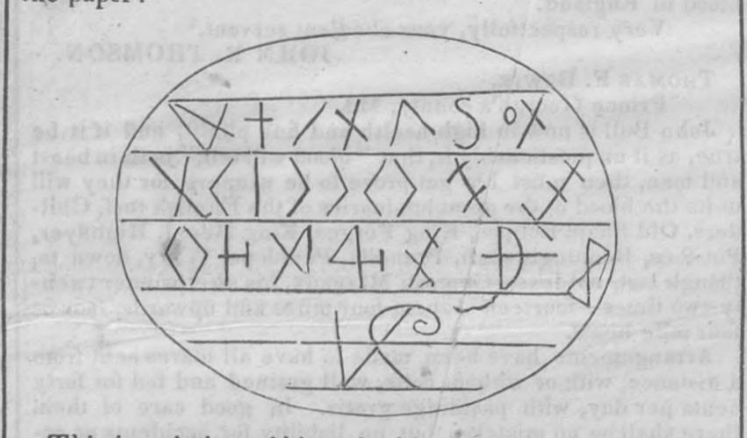
Among the objects in the upper vault was a small, thin, flat tablet of fine gray sandstone, bearing a ring of engraved characters described as “hieroglyphics.” The original article presents a facsimile of the inscription, showing an oval or circular stone inscribed with a sequence of symbols arranged around its face. To the nineteenth‑century observer, this was proof that, at least by the time of the later burial, the mound‑builders used some form of writing or symbolic notation distinct from Old World scripts.
This inscription, taken together with the copper ornaments and elaborate grave goods, was interpreted as evidence of a more complex, stratified society during the era of the upper vault than at the time when the two individuals in the lower vault were buried. In other words, the mound itself became a layered record of cultural change, with each vault marking a different chapter in the story of a vanished nation.
Not a Mass Grave, but a National Monument
Earlier writers claimed that the Grave Creek Mound contained “many thousands” of human skeletons, but detailed excavation contradicted this. Apart from a few recent Indian burials a few feet below the surface, no additional skeletons or even loose teeth were found in the body of the mound beyond the three individuals interred in the two vaults. The carefully layered clays and dark soils—visible like stratified waves along the tunnel walls—appear to be basket‑loads of earth from the surrounding plain, not decomposed bodies.
This pattern fits a broader observation: numerous small mounds across the Midwest and South often contain large numbers of skeletons, apparently serving as community burial places, while the great mounds typically hold only one or a very few high‑status individuals. The Grave Creek Mound, with its twin vaults and three elite burials, was therefore interpreted as a national monument raised to perpetuate the fame of distinguished chiefs or “kings,” rather than a common cemetery for the masses.
Age, Origins, and the Call to Preserve
At the time of its first white visitors, the mound was covered with mature forest growth comparable to that on adjacent hills. A massive white oak on the summit, believed to be around seven centuries old, probably did not begin its life until at least a century after construction, suggesting the mound may have been completed eight hundred or more years before the early 1800s. Some antiquarians speculated an even greater antiquity, linking the siting of mounds on older river terraces—not on the youngest floodplains—to very slow, long‑term changes in river courses and shorelines.
The article closes with a passionate plea. Across America, mounds were being plowed down for fields, leveled for houses, or quarried for fill, much as the marble ruins of ancient Greece had been burned for lime. The Grave Creek Mound’s owner, Jesse Tomlinson, was praised for his determination to keep its exterior intact, to wall the excavation tunnels, and to crown the summit with a three‑story summer house where visitors could both overlook the landscape and examine the relics from the vaults. These earth‑heaped tombs, the author argued, are almost the only “history” the ancient builders left behind—and for that reason, they deserve “religious” preservation as enduring witnesses to a lost people and their quest for posthumous fame.
Source: https://www.loc.gov/resource/sn83026172/1839-06-29/ed-1/?sp=2&q=Arkansas+Mounds+skeleton&r=0.02,0.006,0.342,0.204,0
Gallery
Discussion (0)
Please sign in to join the discussion
No comments yet. Be the first to share your thoughts!