Nephite Warriors and Ancient Wheat: Unearthing Utah's Mound Builder Mysteries
Shadows of the Payson Mounds
Six ancient mounds rise on the Payson Farm in Utah Territory, spanning 20 acres with heights from 10 to 18 feet and circumferences up to 1,000 feet. For years, farmers planted grain right to their bases, oblivious to the builders buried within. In 1877, explorers dug into these earthworks, seeking relics or treasure predicted by mediums, and uncovered evidence of a sophisticated people predating local Indians.
The Large Skeleton and Its Weapons
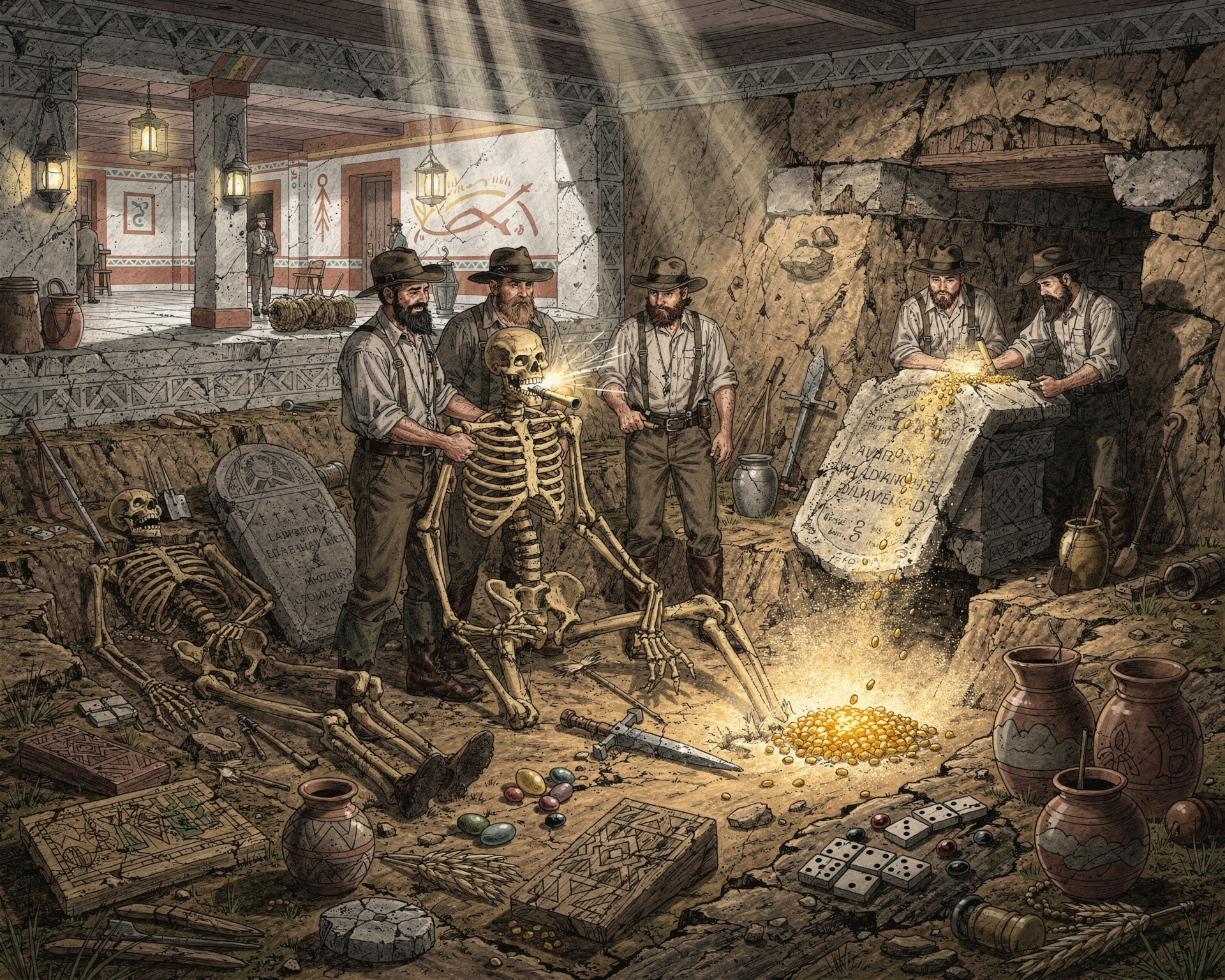
Last year, diggers exposed the feet of a massive skeleton in one large mound, carefully freeing an intact male frame measuring six feet six inches tall—far taller than typical natives. Clutched in its right hand was a huge iron or steel weapon that crumbled to dust upon touch, hinting at advanced metallurgy. Nearby lay perfectly preserved cedar wood carved into fantastic shapes with edged tools, plus a five-ounce sandstone pipe with a drilled bowl still positioned between the skeleton's teeth.
A smaller skeleton nearby, likely female, rested under a neatly carved tombstone. Locals linked these giants to the Nephites, a tribe from the Book of Mormon said to have lived here 1,400 years ago, locked in fierce wars with their enemies, the Lamanites.
Nephites vs. Lamanites: Mormon Lore
In Mormon theology, the Nephites and Lamanites descend from ancient migrations to the Americas around 600 BC, led by Lehi's family from Jerusalem. The Nephites, faithful and industrious, built cities, farmed, and crafted metal; their records form the Book of Mormon, translated by Joseph Smith in 1830. The darker-skinned Lamanites, cursed for wickedness, warred relentlessly against them, culminating in the Nephites' annihilation around 400 AD at Cumorah—echoing the "terrible encounters" noted by explorers. These mounds, per locals, mark Nephite strongholds in Utah, aligning with Mormon views of mound builders as their lost kin.
Miracle Wheat from a Sealed Vault
Adjacent to the female skeleton, a hard cement-like seal—mimicking solid rock—guarded a box's corner; patient labor revealed three pints of wheat kernels inside. Most dissolved in air and light, but central grains stayed fresh, were planted last spring, and yielded four and a half pounds of heads despite insect attacks. This club wheat, with extra-long heads and huge grains, outperforms local varieties, reviving a strain unknown today.
Relics of a Lost Civilization
The mounds hid intact houses with plastered rooms in white and red, modern-style pottery, vases depicting local mountains for 20 miles, corn-grinding millstones, charred yellow dent corn cobs, clay molds for tools, deer-horn needles, stone flints, beads, marbles, and polished stone "dominoes." These agriculturalists mastered arts and sciences, their homes pristine as the day built. Amasa Potter's 1877 letter promises more revelations, cementing Payson as a window into Nephite glory.
Gallery


Discussion (0)
Please sign in to join the discussion
No comments yet. Be the first to share your thoughts!