Nephilim Artifact Hoard?
The Giant-Sized Weapons Buried 70 km from Goliath’s Hometown
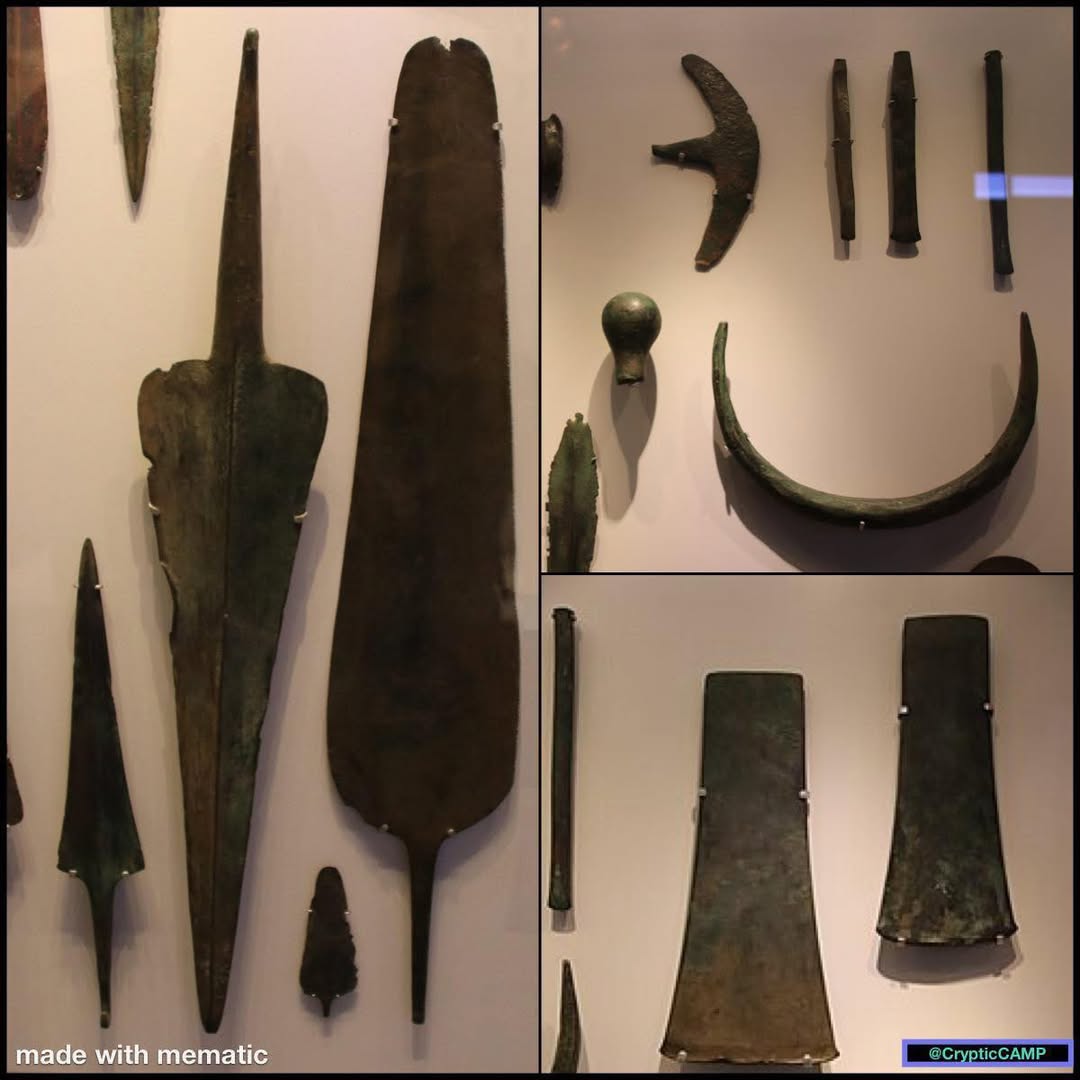
In 1962, during routine drainage work on a kibbutz field in central Israel, workers struck something hard. What they pulled from the earth wasn’t just another collection of Bronze Age tools; it was a hoard of copper weapons and armor so large that many of the pieces look almost comical in the hands of a normal-sized person. The site is called Kfar Monash, and it lies a mere 65–70 kilometers northwest of Tell es-Safi—the biblical city of Gath, hometown of Goliath and the other giant warriors of Philistia.
The discovery has been known to archaeologists for decades, yet it rarely makes headlines. Perhaps that’s because the implications are a little too uncomfortable for the standard textbook narrative.
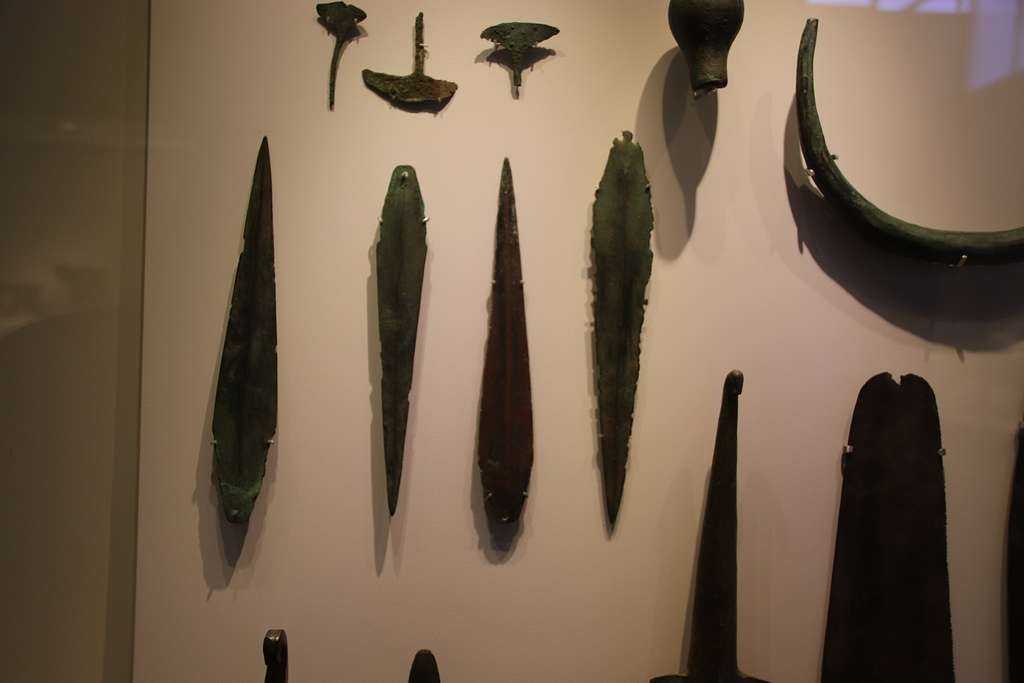
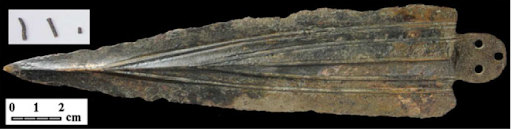
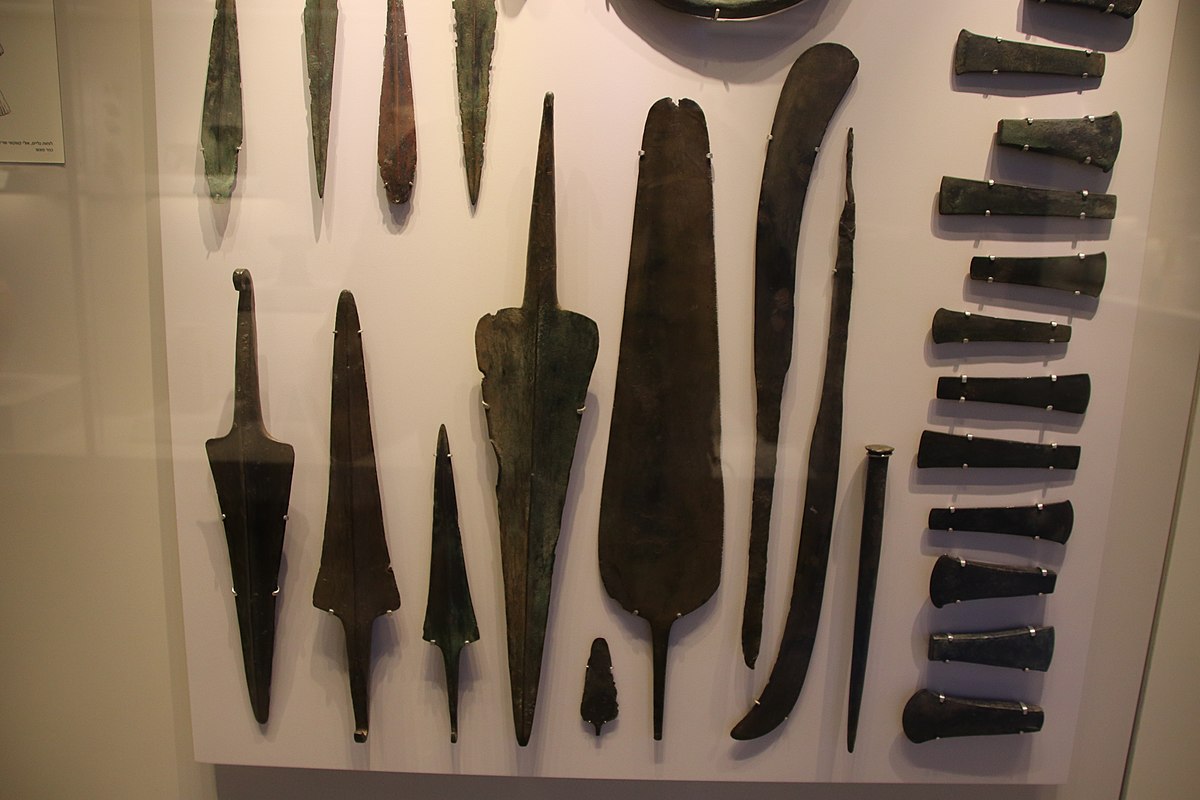
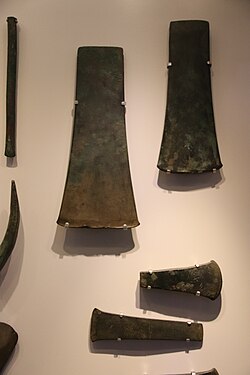
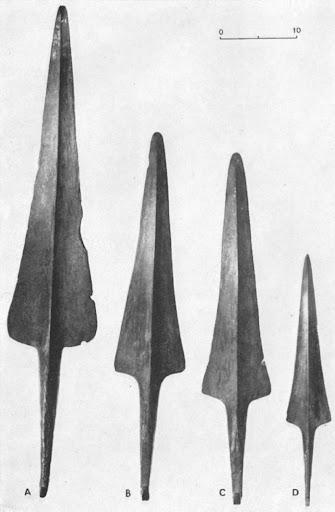
The hoard dates to the Early Bronze Age III, roughly 2700–2200 BCE, and contains more than four hundred copper objects. Among the axes, chisels, and daggers are four crescent-shaped spearheads. The largest is 66 cm long and weighs more than two kilograms—just the metal head. Mounted on a wooden shaft three or four meters long, the finished spear would have towered over the average man and required enormous strength to wield effectively.
Then there are the roughly eight hundred thin copper plates, each pierced with small holes. Most scholars identify them as scales for flexible scale armor, the same type of armor later found in excavations at Gath itself. Sewn in overlapping rows onto a leather or linen backing, eight hundred scales could equip several ordinary warriors… or one single, colossal coat of mail.
The Bible, of course, describes exactly that.
Goliath’s coat of mail weighed five thousand shekels of bronze—about 57 kilograms (125 pounds). His spearhead alone weighed six hundred shekels, roughly 7 kilograms. The shaft was “like a weaver’s beam.” The Kfar Monash spearheads are smaller than the biblical monster, but they are still two to three times larger than normal Early Bronze Age examples, and they come from the same broader region where the Rephaim, Anakim, and Philistine giants were said to live.
Scripture places these oversized peoples in precisely the area where these artifacts keep turning up. The Anakim dominated the hills of Hebron, less than an hour south of Kfar Monash. The Rephaim held the Bashan and the coastal plain. Gath sat right in the middle of the Shephelah, the gateway between the Judean hills and the Philistine cities. When the Israelite spies returned from Canaan trembling, they reported, “We seemed like grasshoppers in our own eyes, and we looked the same to them” (Numbers 13:33).
The Kfar Monash hoard is fifteen centuries older than Goliath, so no one is suggesting these exact weapons belonged to him. What it does show is an extremely ancient regional tradition of manufacturing arms and armor on a scale far beyond the human norm—a tradition that apparently persisted for millennia in the same corner of the southern Levant.
Archaeology has already revealed Early Bronze Age cities in the region surrounded by walls up to eight meters thick, gates wide enough for chariots to pass two abreast, and public buildings that dwarf anything from the later Iron Age. Some of the human remains recovered from these periods display traits consistent with pituitary gigantism, though such finds are rarely emphasized in official reports.
So the next time someone dismisses the biblical giants as myth or exaggeration, remember this: seventy kilometers from Goliath’s hometown, buried in a field for four and a half thousand years, lie copper spearheads longer than a man’s arm and enough armor scales to clothe a titan.
The ground in Israel still remembers when there were giants in the earth.
What do you make of it—advanced metallurgy for elite warriors, a lost race of oversized humans, or something the textbooks aren’t ready to admit? Let me know in the comments. I read them all.
Gallery
Discussion (0)
Please sign in to join the discussion
No comments yet. Be the first to share your thoughts!