🏝️ “Mound Builders in the Pacific: Relics Linking Ancient America to the Marianas” 🏝️

A German professor named Franz Mueller—then managing investments in German Samoa—stumbled upon one of the most intriguing archaeological mysteries of the Pacific while visiting the Mariana Islands (then called the "Ladrone Islands" by Europeans, a name derived from Spanish "ladrones" meaning thieves). Just 90 miles from Agana (today's Hagåtña, capital of Guam), Mueller explored a nearby island and uncovered man-made earthen mounds eerily similar to those built by North America's ancient Mound Builders. These geometric structures, complete with deep central wells, echoed the ceremonial mounds of Ohio's Hopewell culture and Central America's ancient sites—prompting Mueller to theorize a shared ancestry across oceans.
The discovery began innocently: Mueller noticed native workers using unusual stone bowls unlike their traditional tools. They revealed these had been dug from "the ground" on an island about 20 miles distant. Visiting the site, Mueller excavated dozens of mounds arranged in precise shapes. From them emerged stone-carved ornaments, intricately designed pipes, household utensils, and weapons crafted from stone, copper, and mica—materials and styles strikingly akin to Aztec artifacts and Mississippi Valley relics from 1,000–2,000 years ago.
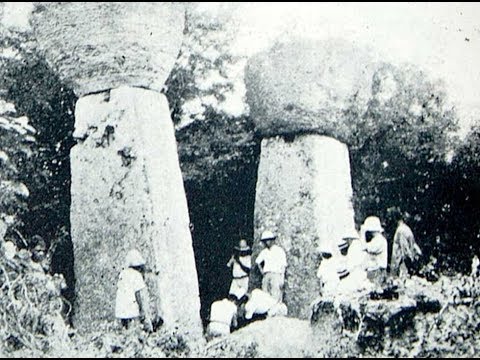
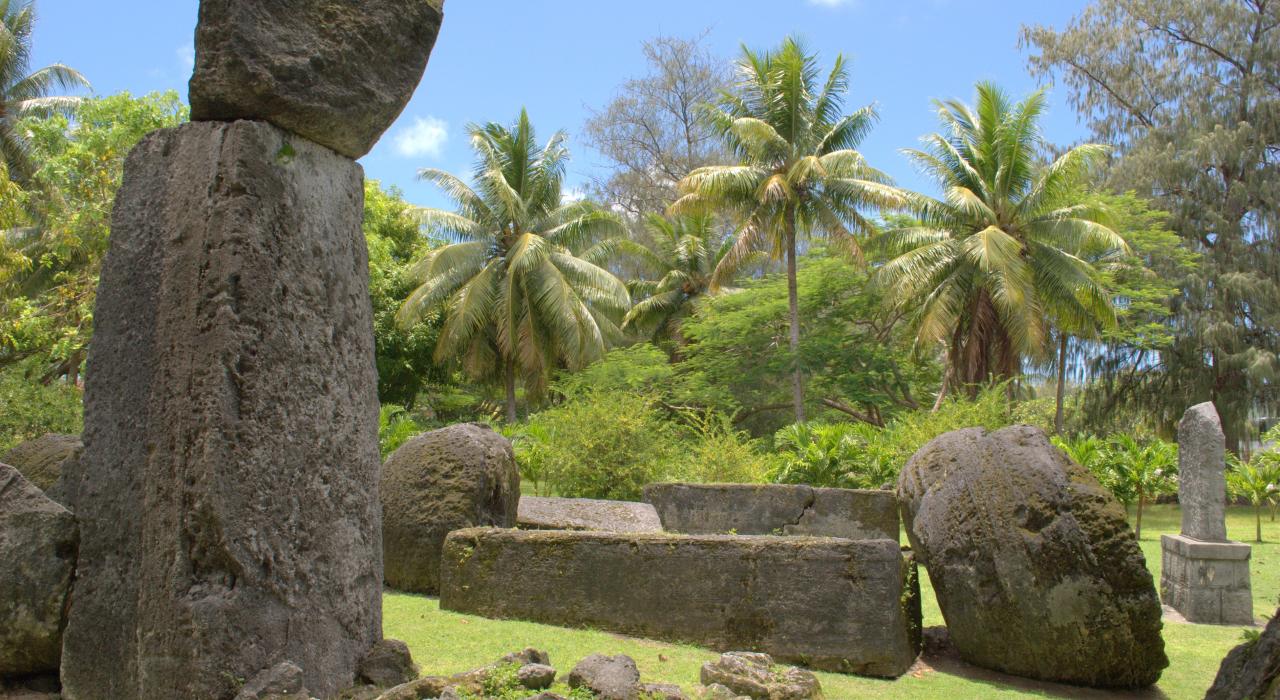
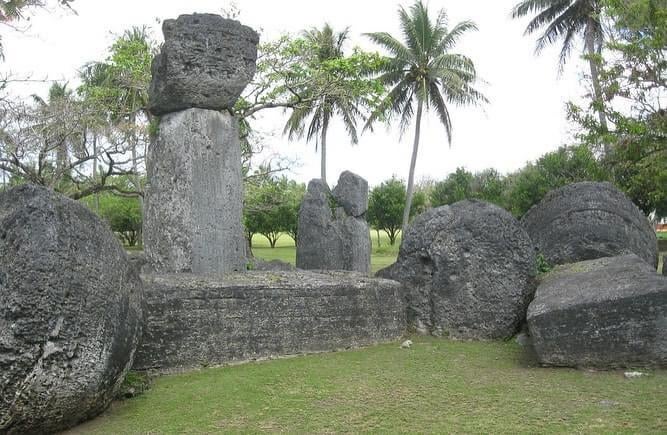
Mueller packed the finds for shipment to German museums, declaring them proof of a "vanished race" with no connection to the local Chamorro people, whose legends held no memory of the builders. His theory of kinship between Pacific and American mound cultures fueled early speculation about ancient trans-Pacific voyages, though modern archaeology attributes the Marianas mounds to prehistoric Chamorro latte stone sites or natural formations rather than continental migrants.
Today, the Mariana Islands—split between U.S. territory Guam and the Commonwealth of the Northern Mariana Islands (like Saipan and Tinian)—retain their name (evolved from "Ladrone" to "Marianas" in the 1700s). No exact island is named in the report, but the proximity to Guam suggests sites near Rota, Tinian, or Saipan, where ancient stone platforms persist. Mueller's finds, if authentic, highlight how 19th-century explorers often linked distant cultures through shared motifs, predating modern DNA evidence that shows no direct Mound Builder-Pacific ties.
Author’s Note: Adapted from a Victoria, B.C. newspaper dispatch dated June 19, 1900. The "Ladrone chain" refers to the Mariana Islands under Spanish/German control; "San Ignacio de Agana" is historic Hagåtña, Guam. Contemporary views see these as local prehistoric features, not transoceanic evidence.
Source: https://www.loc.gov/resource/sn84024441/1899-06-19/ed-1/?sp=2&q=Vanished+race&r=0.526,0.812,0.212,0.138,0
Gallery
Discussion (0)
Please sign in to join the discussion
No comments yet. Be the first to share your thoughts!