Gods in the Lost City of Bolivia: Tiahuanacu, Gold, and a Creation Story That Echoes the Bible
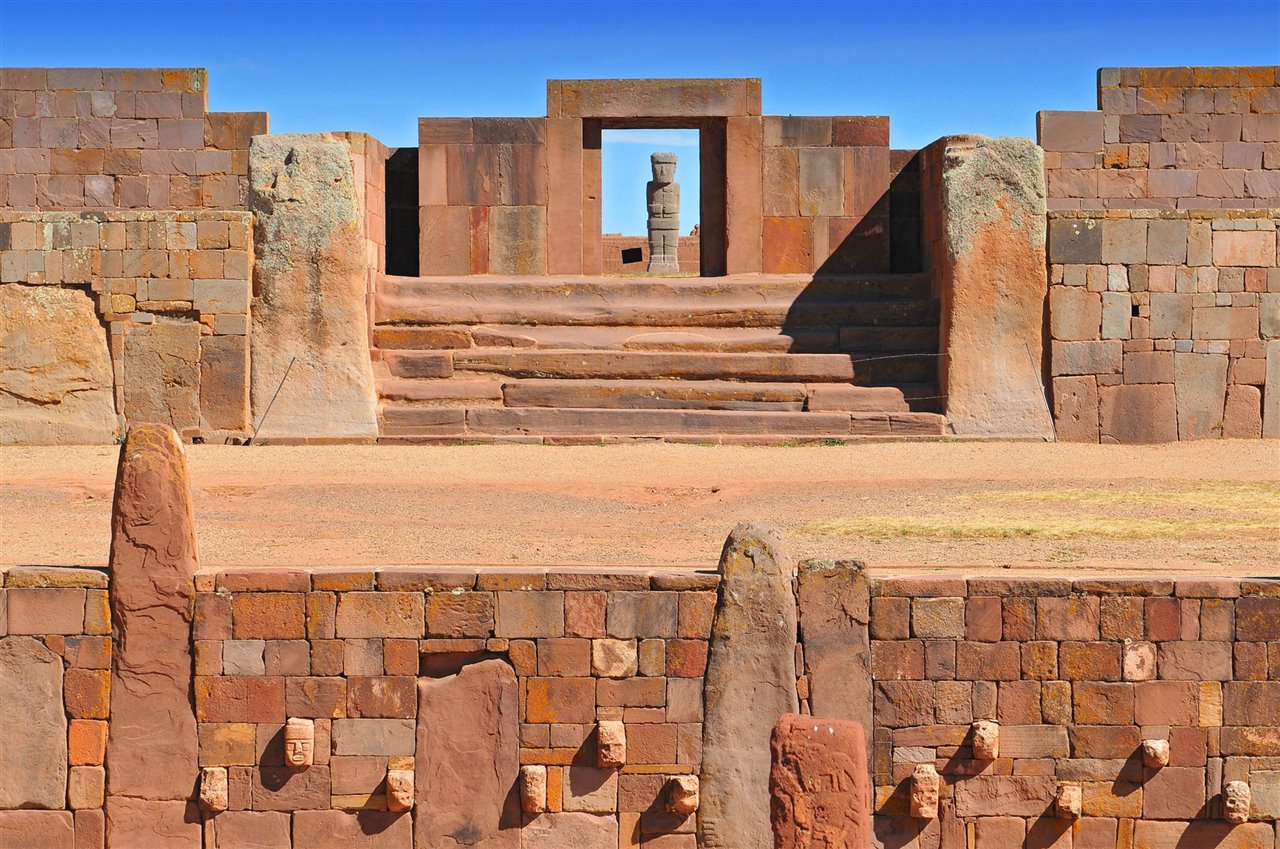
A vanished city above the clouds
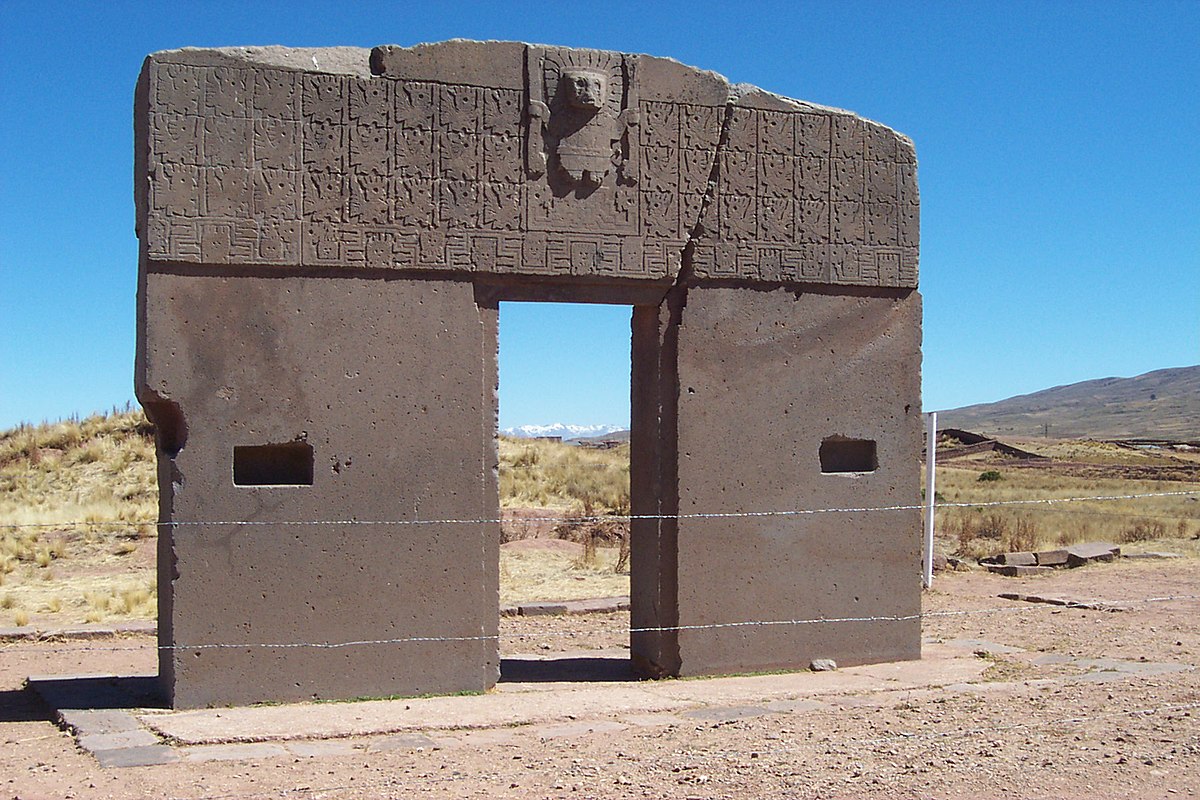
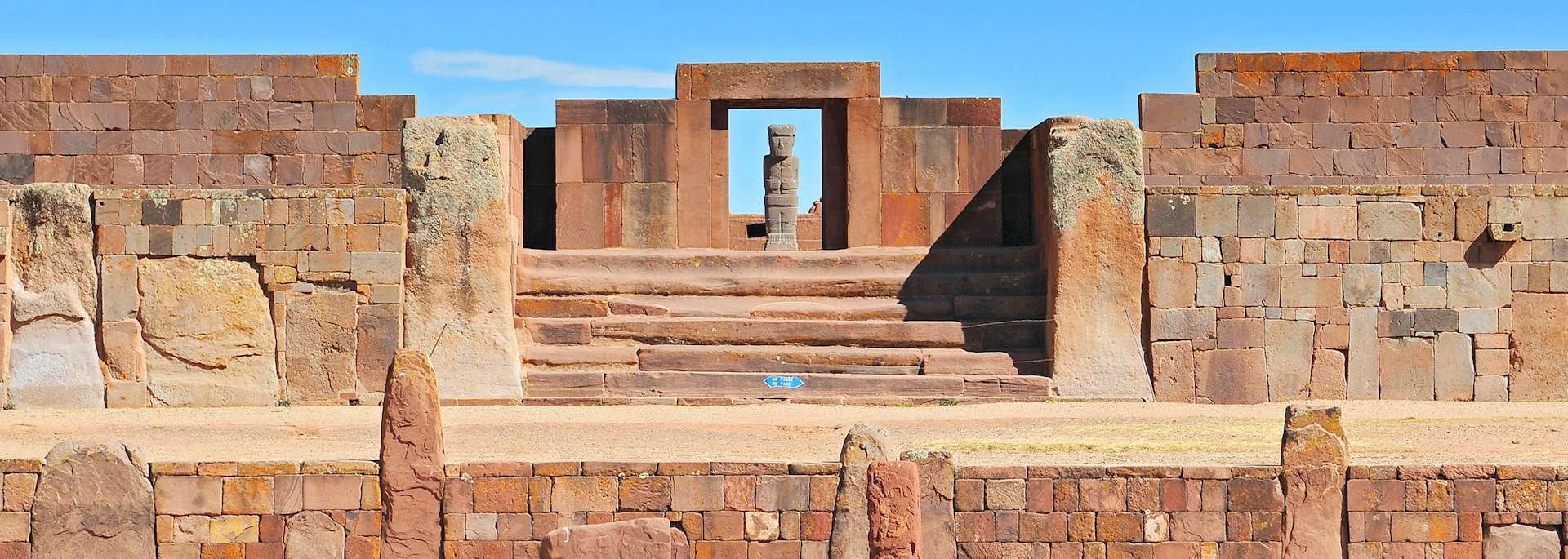
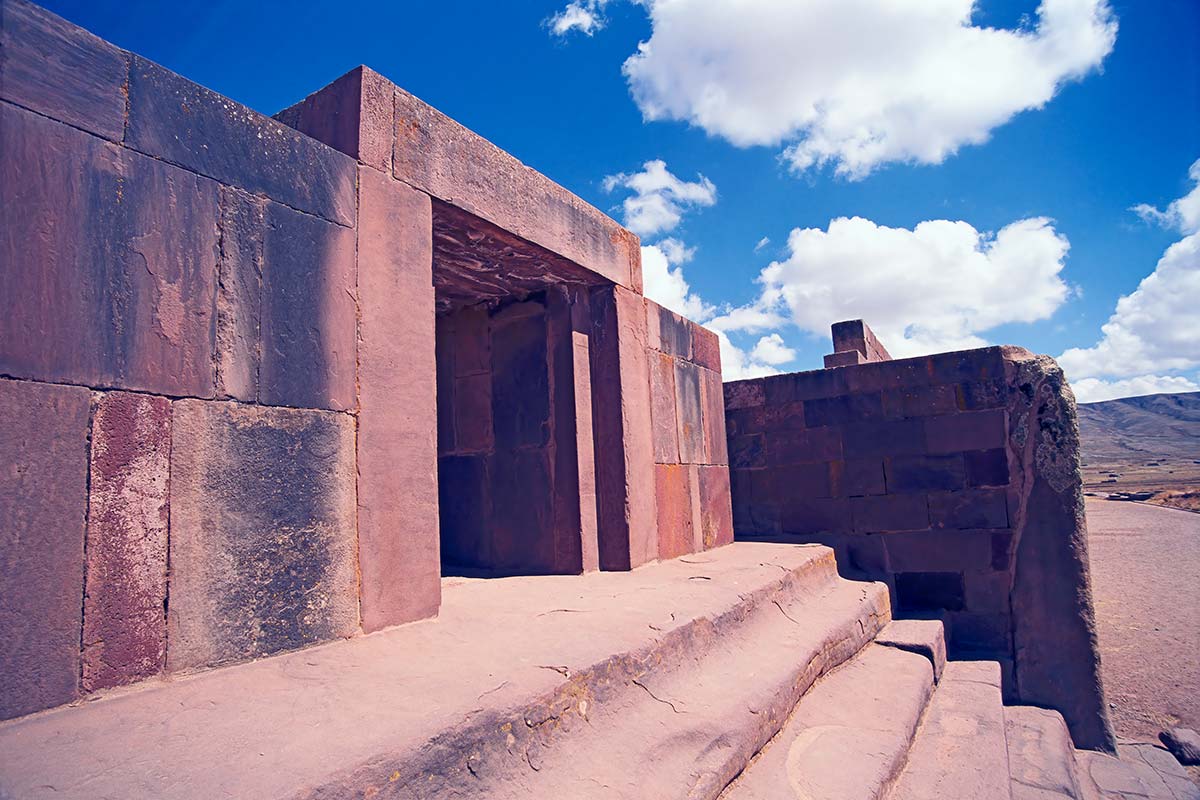
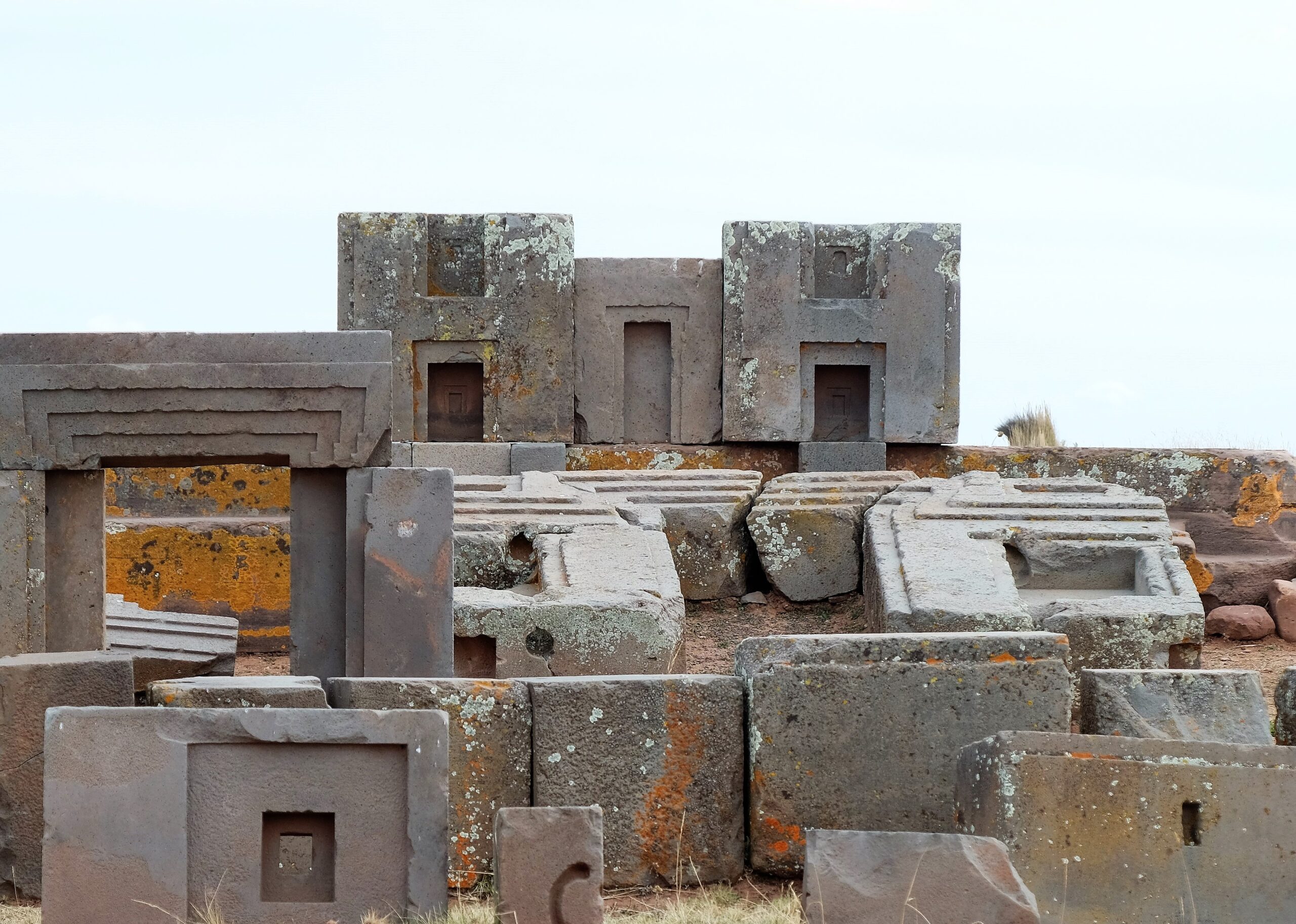
High on the Bolivian altiplano, about twelve miles from Lake Titicaca, lie the sprawling ruins of Tiahuanacu (Tiwanaku), a city the 1911 feature describes as covering an area equal to “about a dozen 160‑acre farms.” Massive terraced mounds, platforms, and the remains of a great “Temple” complex—roughly 445 by 388 feet—hint at a monumental center built from perfectly fitted stone blocks, some as large as 26 feet long and many worked without mortar so tightly that a knife blade could not be slipped between them. By the time of that early 20th‑century report, much of the original architecture had been robbed for building stone, but colossal pillars, carved monoliths, and a famous single‑block stone gateway still testified to a lost engineering tradition.
The article’s author walks through a living landscape of ruins and reuse: railway passengers can see cut stones at the station, and local mud houses and even the Catholic church incorporate blocks taken from the ancient city. In front of the church stand carved stone figures from Tiahuanacu, literal idols from a pre‑Christian sacred center now flanking a Christian gateway—layers of belief and memory sharing the same plaza.
Gold, skulls, and a forgotten race
What gave the 1911 story its sensational edge was not just the stones, but the burials emerging beneath them. Excavations directed by Dr. Buchteln uncovered thousands of ceramic vessels—from large vases to egg‑cup–sized pieces—many so fine they rang like porcelain, along with human skeletons carefully interred with pottery offerings. According to the report, the investigator believed some layers could reach back roughly 8,000 years before the article’s time, placing this culture many millennia before Christ and even earlier than the first stones of the Egyptian pyramids, at least in his interpretation.
Especially arresting were the skulls of women, each said to bear an ultra‑thin plate of pure gold on the forehead, embossed with the image of a man. The piece frames this as a symbolic clue to gender and devotion, suggesting that “the weaker sex worshiped the stronger,” but for a modern reader it signals a ritual language in which gold, the human face, and the head itself formed a powerful nexus of status and sacred identity. Nearby museums in La Paz displayed gigantic stone heads and idols from Tiahuanacu, some with angular, almost “cubist” features, further underlining the sense that this was the material residue of a very different world and way of seeing.
The Aymara legend: stone people and a dark angel
The living Aymara of the plateau, the article notes, are likely not the original builders of Tiahuanacu, but they carry origin stories that reinterpret the ruins and the stone idols as the petrified remains of a wicked primordial race. One tradition holds that the very first people on earth became so corrupt that the gods turned them into stone, leaving the statues of Tiahuanacu as the physical evidence of their judgment. In this telling, the megalithic city is not just an archaeological site; it is a fossilized moral lesson in basalt and sandstone.
Their creation story introduces the great god Pachacamac as the maker of the world, which begins as a beautiful, well‑provisioned place for humanity. Over this world, however, rules Khunu, described as an “angel of darkness rather than of light,” who brings drought, cold, and escalating hardship until humans are reduced to an almost bestial existence. This figure of Khunu functions much like a satanic or adversarial power, an anti‑benefactor whose influence twists the original harmony into misery.
Flood, darkness, and a cosmic war
The myth then moves into a phase that will sound very familiar to readers of Genesis. Pachacamac confronts Khunu in a cosmic struggle: he spreads rains over the earth to reverse the drought, causing deserts to bloom and bringing forth the sun to warm the world again. Khunu responds by intensifying the rains until a catastrophic flood engulfs the earth, and darkness covers everything while the battle between the gods rages.
Here the parallels to the biblical flood narrative become hard to miss. In Genesis, human violence and corruption lead to God’s decision to send a world‑engulfing deluge, with the waters described as overwhelming creation and undoing the separation between the deep and dry land. In the Aymara story, the moral corruption of the first people brings two stages of judgment: first petrifaction into stone, then a swelling flood tied to the clash between a benevolent creator and a dark adversary. Both traditions portray water as a dual symbol: the instrument of destruction and the medium for a cosmic reset, clearing the way for a transformed world.
New creation: Pachacamac, plateaus, and biblical echoes
The Andean myth does not end with the flood. Pachacamac ultimately defeats Khunu, appears as a radiant sun god, and “covers the world with light,” shifting the cosmos back from darkness into ordered illumination. He then creates another assisting god whose role is explicitly geomorphic: this deity cuts down the mountains, shapes the plateaus, erases deserts, and causes springs to burst from the rocks, remaking the very topography of the altiplano so that humanity can thrive. Under the governance of these gods, humans receive a fresh start and slowly rise to become “lords of creation,” restored to a position of dominion within a renewed world.
Biblical creation and flood narratives follow a comparable pattern at the level of structure, even if the theology is very different. In Genesis 1, God brings light, separates waters, forms dry land, and shapes a habitable earth before placing humans in a position of stewardship: to be fruitful, multiply, and exercise dominion. After the flood of Genesis 6–9, there is again a return from water‑dominated chaos to dry land, blessing, and a renewed human mandate, as Noah and his descendants step into a “new creation” with a covenant sign in the sky. The Aymara myth condenses these ideas into one continuous cycle: original creation, corruption, petrifaction, flood, cosmic conflict, and then an explicit re‑shaping of mountains, deserts, and springs that culminates in humanity’s restored lordship.
Key similarities to the Bible’s creation and flood
For readers interested in deep cross‑cultural patterns, the Tiahuanacu story and Genesis share several striking motifs:
- Corrupt primordial humanity
- In both traditions, the earliest humans fall into profound wickedness, provoking a world‑scale judgment. Genesis speaks of the earth being “filled with violence” before the flood; the Aymara tale describes people becoming so wicked they are literally turned to stone.
- Divine judgment through water
- Both narratives center on a catastrophic flood that effectively resets history. In Genesis, God alone decides the timing and extent of the deluge; in the Andean version, the flood arises from the escalating conflict between Pachacamac and the dark power Khunu.
- From darkness to light
- The movement from darkness to light is central in both. In Genesis 1, creation begins with “Let there be light,” while the flood story involves the return of clear skies, dry land, and a visible bow in the clouds. In the Aymara myth, flood and darkness dominate until Pachacamac triumphs and appears as the sun god, covering the world in light once more.
- Renewed world and human dominion
- Both traditions end with a recreated or renewed earth and a humanity tasked with ruling or stewarding creation. The Andean assistant god levels mountains and brings forth water so humans can “rise to be the lords of creation,” paralleling the renewed blessing and dominion given to Noah’s line after the flood.
Major differences in cosmology and imagery
Alongside the parallels are equally important differences that show how distinctly Andean this narrative is:
- Many gods vs. one God
- The Aymara account is openly polytheistic: Pachacamac, Khunu, and an additional earth‑shaping god all play roles in the drama. Genesis, in contrast, is radically monotheistic; creation, judgment, and re‑creation are the work of one sovereign God who faces no equal adversary, only subordinate or rebellious beings.
- A personified adversary within the myth
- Khunu is portrayed as an “angel of darkness” and active bringer of disasters, more like a mythic rival than the more backgrounded Satan figure in the Hebrew Bible’s earliest narratives. The Genesis flood text itself does not depict the disaster as a result of a direct clash between God and a cosmic opponent, but as God’s own response to human evil.
- Stone people and visible judgment
- The idea that the first, wicked people became stone—and that the idols of Tiahuanacu literally are those transformed beings—is uniquely keyed to the visible stonework on the plateau. Genesis contains no motif of human petrifaction; the destruction is total submersion and death, not metamorphosis into monuments. Here Andean myth turns archaeology into theology: megalithic statues become the frozen bodies of a judged race.
- Geomorphology as sacred biography
- The auxiliary god who cuts down mountains, forms plateaus, wipes out deserts, and opens springs is clearly modeled on the Andean landscape itself, helping explain why the altiplano, terraces, and water sources look the way they do. Genesis is relatively silent on detailed re‑shaping of mountains after the flood; it mentions the ark resting on the mountains of Ararat, but does not attribute specific landforms to post‑diluvian divine engineering.
Why these parallels matter for Tiahuanacu
For anyone researching ancient mysteries and highland civilizations, the 1911 “Gold Is Found in Lost City of Bolivia” narrative is valuable not just for its description of ruins and artifacts, but for how it records living Aymara myth as a lens on the stones. The creation story of Pachacamac and Khunu ties three levels together: the moral history of a lost race, the visible megaliths and idols of Tiahuanacu, and a global‑seeming catastrophe that resonates strongly with biblical flood traditions.
https://www.loc.gov/resource/sn88084272/1914-08-01/ed-1/?sp=20&q=Vanished+race&r=-0.022,-0.017,0.553,0.36,0
Gallery
Discussion (0)
Please sign in to join the discussion
No comments yet. Be the first to share your thoughts!