George Washington's Giant Skeletons: A Colonial Discovery at Fort Loudoun Virginia!
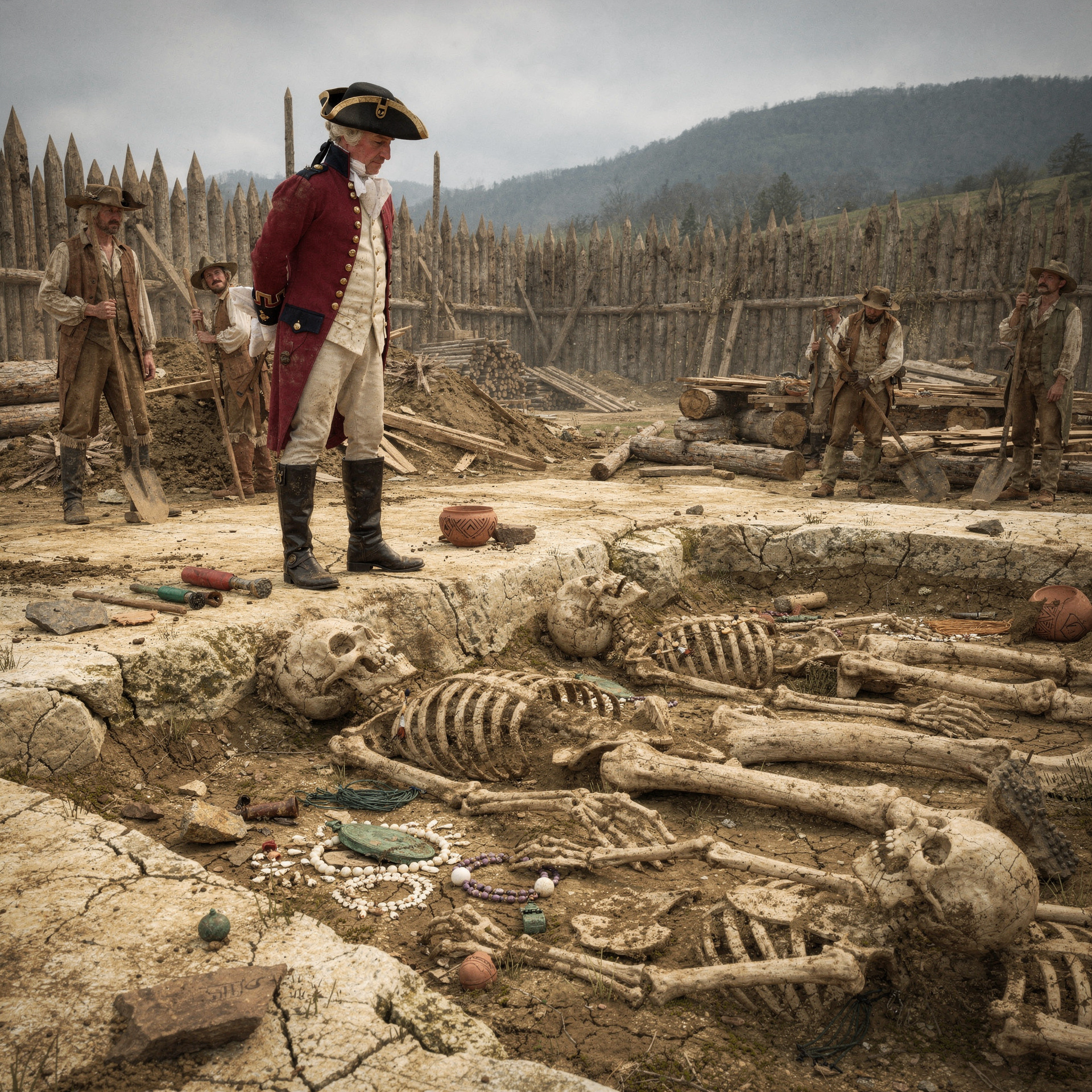
Fort Loudoun in Winchester, Virginia, earned its place in history during the French and Indian War—not just for its military role, but for the bizarre discovery that stopped construction dead. Colonel George Washington oversaw the site's development in 1755, turning a quiet hill north of town into a frontier stronghold against French and Native threats.
Workers breaking ground for the foundations hit something grim: human bones, layer after layer. What started as scattered remains quickly revealed a full ancient burial ground, predating any known local settlements. Artifacts turned up alongside—stone tools, pottery fragments, copper ornaments, and shell beads that colonials pegged as Native in style.
But the real shock went beyond the relics. Washington himself documented the skeletons in reports to Williamsburg officials: every adult measured well beyond ordinary height. While his soldiers averaged five-and-a-half feet, these bones stretched over seven feet, with massive skulls and limbs hinting at a race of giants. He called the proportions extraordinary, ordering close examination of both bones and grave goods.
No follow-up records survive—did the skeletons end up crated for study, reburied hastily, or lost amid wartime chaos? Washington's own words stand as the lone primary trace, fueling speculation about a pre-tribal people towering over the Shenandoah Valley long before Europeans arrived.
Today, Fort Loudoun's site sits under modern Winchester, its giants silent beneath layers of history. Like Abraham Lincoln's later nods to ancient American giants, this colonial encounter bridges founding fathers with whispers of a forgotten race. True or exaggerated wartime note, it fits a pattern of oversized mound finds across the young nation.
Sources
The core story of giant skeletons discovered during Fort Loudoun's 1755-1756 construction near Winchester, Virginia, originates from a specific 18th-century account attributed to George Washington, with modern retellings preserving the details. [accessgenealogy](https://accessgenealogy.com/.../the-fort-loudon-skeletons...)
**Primary Online Retelling and Narrative Source**
- Access Genealogy compiles Washington's reported discovery: excavation revealed a Native American cemetery with 7-foot adult skeletons taller than Europeans or local Indians, alongside artifacts; no record of their fate. [accessgenealogy](https://accessgenealogy.com/.../the-fort-loudon-skeletons...)
**Fort Loudoun Historical and Archaeological Context**
- Virginia Department of Historic Resources (DHR): Site details confirm Washington's design of the half-acre fort as a command center during the French and Indian War, with preserved bastion, well, and barracks features from excavations. [dhr.virginia](https://www.dhr.virginia.gov/historic-registers/138-5089/)
- Mount Vernon Digital Encyclopedia: Construction timeline (1756-1757) matches, noting the fort's role north of Winchester as Washington's residence. [mountvernon](https://www.mountvernon.org/.../article/winchester-virginia)
- French and Indian War Foundation: Archaeological finds include barracks foundations and artifacts; well dug 103 feet through limestone, aligning with burial discovery during early digging. [fiwf](https://fiwf.org/fort-loudoun/)
- Winchester History (George Washington's Office Museum): Describes the log-and-earth fort with barracks for 450, confirming the well as the main surviving feature. [winchesterhistory](https://winchesterhistory.org/george-washingtons-office/)
**Academic and Encyclopedic References**
- Encyclopedia Virginia: Washington's improved fort design for the Seven Years' War backcountry defense; ongoing archaeology uncovers period artifacts but no skeleton mentions. [encyclopediavirginia](https://encyclopediavirginia.org/fort-loudoun-site/)
- Jolley Archaeological Report (PDF): Detailed 44FK593 site investigations validate military features without referencing burials. [fiwf](https://fiwf.org/.../Jolley-article-re-Ft-Loudoun-Site.pdf)
**Notes on the Skeleton Claim**
Historians note the fort's verified history but treat the 7-foot skeletons as unverified or anecdotal—absent from official archaeological reports—possibly stemming from Washington's letters to Williamsburg officials, echoed only in niche genealogy sites. Modern digs focus on military remnants, not prehistoric graves. [dhr.virginia](https://www.dhr.virginia.gov/historic-registers/138-5089/)
Discussion (0)
Please sign in to join the discussion
No comments yet. Be the first to share your thoughts!