Fetus with Elongated Skull!!??
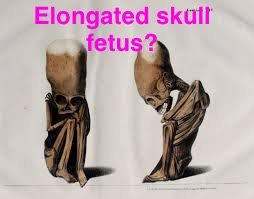
Mariano Eduardo de Rivero y Ustariz, a Peruvian naturalist and mineralogist, and Johann Jakob von Tschudi, a Swiss naturalist and explorer, documented a groundbreaking discovery in their 1851 book *Antigüedades Peruanas*, published in Vienna.[4][5][6]
The Researchers
Rivero, born in 1804, served as director of Peru's National Mint and was a key figure in early Peruvian archaeology. Tschudi (1818–1889), known for his extensive South American expeditions, collaborated with Rivero to catalog pre-Columbian artifacts. Their folio systematically illustrated over 60 plates of Peruvian antiquities, blending scientific rigor with artistic precision.[6][7][8]
The Discovery
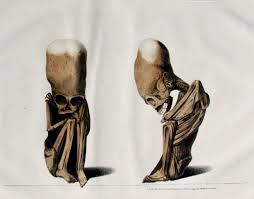
In a cave near Huichay, about two leagues from Tarma in central Peru's Junín region, they examined a mummified pregnant woman and extracted a seven-month-old fetus from her womb. The fetus displayed a naturally elongated cranium—narrow, symmetrical, with a retreating forehead and no signs of artificial binding or pressure marks—leading them to propose an extinct population with innate cranial traits that later cultures mimicked.
Researchers' Description
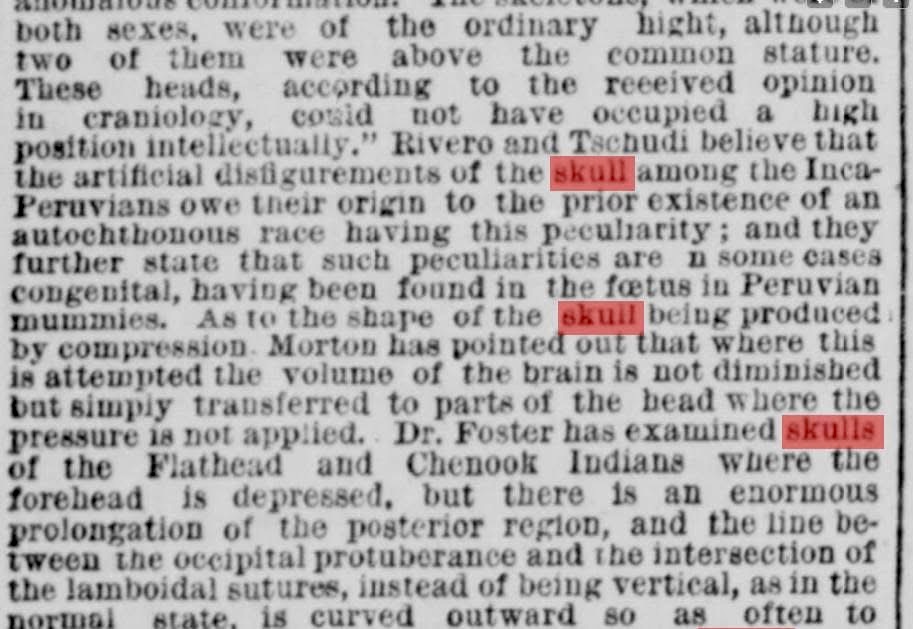
Rivero and Tschudi noted skulls of extraordinary height according to common craniology standards, with depressed foreheads, enormous posterior development, and outward-curving vertical occipital sutures. They argued artificial disfigurement among Incas originated from mimicking this natural peculiarity in an extinct Peruvian population, where compression cases showed diminished frontal brain areas contrasting the innate elongation.
The Image
The attached image is the authentic original lithograph from Plate VI (Lámina VI) of the Vienna edition, showing two views (lateral and posterior) of the mummified fetus in fetal position with desiccated skin and wrapped limbs. Created by artist Josef Kriehuber via stone lithography from the authors' direct measurements and sketches of the physical specimen in their collection, it served as visual scientific evidence in 19th-century publications.
Specimen's Fate
The authors handled the physical fetus firsthand, measuring its dimensions and noting its natural cranial elongation before illustrating it. No records indicate public display or museum transfer; it likely remained in their private collections post-publication, as was common for 19th-century naturalists.
Current Location
The fetus’s whereabouts today remain unknown, with no verified reports of it in Peruvian museums, European institutions, or modern archaeological inventories. It may have been lost, destroyed, or held in undocumented private holdings, unlike better-preserved Paracas skulls.
Gallery
Discussion (0)
Please sign in to join the discussion
No comments yet. Be the first to share your thoughts!