Ancient Copper Mines and the Smithsonian’s Visit to Isle Royale

This story recounts Prof. William H. Holmes of the Smithsonian Institution's pioneering 19th-century visit to the prehistoric copper mines on Isle Royale in Lake Superior, documenting for the first time the immense scale of Native American mining operations that predated European contact by centuries. It highlights how these ancient miners used only stone tools to extract pure native copper from volcanic rock, leaving behind thousands of pits, trenches, and hammerstones across the island's hillsides, with their metal products traded continent-wide.
Long before Europeans ever saw the Great Lakes, Native miners were cutting into the volcanic ridges of Isle Royale in search of a single prize: raw copper in its pure, native form. The island itself is harsh and poorly suited to permanent settlement, yet for untold generations it drew people from distant tribes, all converging there to quarry metal for tools, weapons, and ornaments.
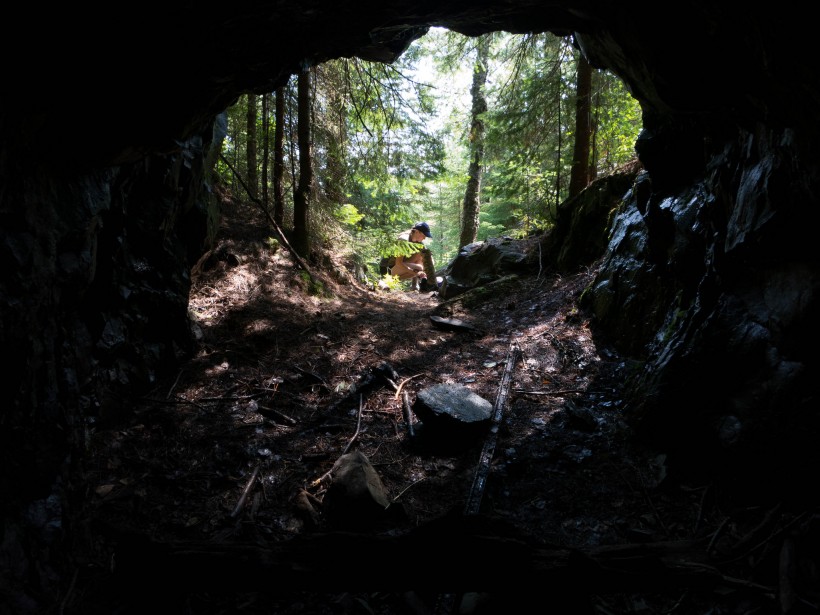
Copper on Isle Royale lies in veins and masses embedded in the dark basalt, and those early miners attacked it with nothing more than heavy stone sledges and hammerstones. Over time, their efforts transformed the landscape: the hillsides became pocked with pits and trenches, many of them now partly filled and cloaked in pine forests. Archaeologists estimate that more than 1,000 of these old workings still remained untouched even after modern prospectors had combed the island for abandoned nuggets.
In the bottoms of these ancient pits, investigators have recovered countless stone tools, each bearing the scars of hard use against metal-bearing rock. So many of these implements lie scattered over the surface that observers have estimated at least 50,000 stone mining tools are visible, a silent testament to the immense labor once expended on this remote island. The copper itself was sometimes found in enormous solid masses, far too heavy for Indigenous miners to move; they could only break away projecting pieces and leave the great nuggets behind in the rock.
Centuries later, those same untouched copper boulders became bonanzas for Euro‑American miners, who reopened the old pits in search of prehistoric spoil. One documented mass of native copper weighed around 12,000 pounds and had to be transported whole to the lake shore and shipped away, even with the aid of modern engineering and equipment. This contrast—between stone hammers and industrial machinery—highlights just how formidable those ancient undertakings truly were.
After the copper was won from the rock, it was patiently cold‑hammered into chisels, knives, awls, ornaments, and other forms, then carried far beyond Lake Superior through a broad, intertribal trading network. Copper artifacts traced back to Isle Royale have been recovered from mounds and graves across vast portions of North America, showing that this metal traveled from village to village as a valued commodity. In this way, the island’s hidden mines linked distant communities in a web of exchange that predated Columbus by many centuries.
When Prof. William H. Holmes of the Smithsonian Institution visited Isle Royale, his survey marked the first systematic exploration of these prehistoric copper workings by a federal scientific bureau. His investigations documented the extent of the pits, the sheer number of stone tools, and the engineering challenges faced by Indigenous miners, and his findings were later prepared for display at the World’s Fair. The work helped shift scholarly understanding of Native North America, revealing a legacy of organized, large‑scale mining that matched the “pipes of ages past” in both age and cultural importance.
https://www.loc.gov/resource/sn86092523/1892-08-14/ed-1/?sp=4&q=Prehistoric+river+Arkansas&r=0.061,0.05,0.757,0.492,0
Gallery



Discussion (0)
Please sign in to join the discussion
No comments yet. Be the first to share your thoughts!